
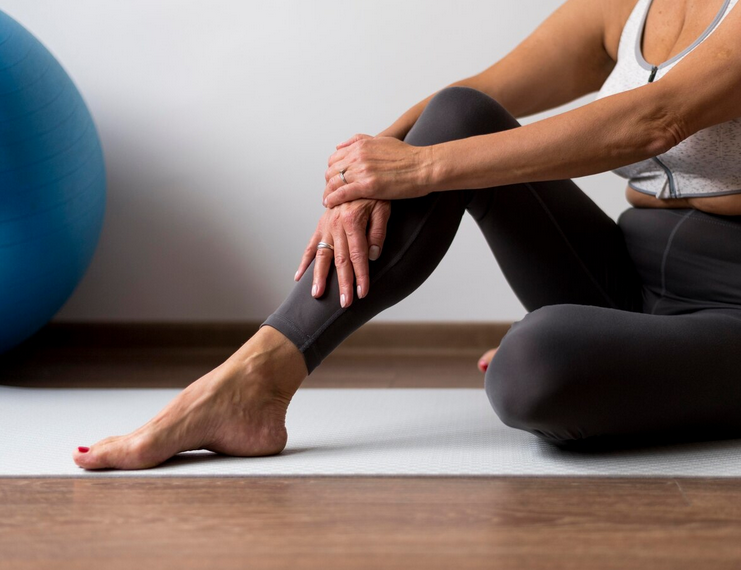
Ankle mobility, or rather the lack of it, is often overlooked. Many people assume ankle problems only matter if they’ve had a sprain or fracture. In reality, limited ankle mobility can affect your entire body, from your knees and hips to your lower back. At physiotherapy clinics, it is very common to see patients with knee pain, hip pain, or back pain where the root cause is actually poor ankle movement. Understanding ankle mobility and how it ties into the whole body can help you proactively prevent pain and reduce your injury risk.
What is ankle mobility?
Ankle mobility refers to how well your ankle joint moves. Normally, the ankle joint moves into dorsiflexion (bringing the foot closer to the ankle), plantarflexion (pointing the foot away from the ankle), inversion (sole of the foot towards the middle), eversion (sole of the foot away from the middle), and a combination of these movements. There are relative “normals” for each movement recorded in degrees, but ultimately, there are lots of individual variations of normal. Usually, we talk about restricted ankle mobility in something being different for that specific person, such as between their left and right sides. Healthy ankle mobility is essential for:
- Walking
- Running
- Squatting
- Going up and down stairs
- Maintaining balance
- Absorbing shock during movement
Why is ankle mobility so important?

To sum it up, when ankle motion is restricted, your body is forced to compensate elsewhere. For example, the ankle is one of the first joints that contacts the ground while moving around. If it does not have the mobility to perform its job as a shock absorber properly, them the joints above it must work harder. As a result, they will experience a greater proportion of stress. For another example, somebody without sufficient dorsiflexion in their ankle has a very hard time going down stairs. Instead, a lot of pressure goes into the knee as it has to bend much more to compensate for the ankle. Try it yourself at home! Can you go down the stairs without bending your ankle? Instead, you might find this happening when ankle mobility is limited:
- The knee collapses inward or twists
- The hip rotates excessively
- The lower back moves more than it should
- Balance becomes less stable
- Muscles fatigue faster
Over time, these compensations increase stress on other joints and tissues, leading to pain and injury.
Common causes of ankle restrictions

Ankle stiffness can develop for many reasons, even without recent injury. For example, many people don’t realize their ankle never fully recovered after an old sprain. It might have recovered 90% of the way so that they don’t notice it day to day, but over the course of years the effects from that can build. Common causes include:
- Previous ankle sprains (even years ago)
- Immobilization in a boot or cast
- Tight calf muscles
- Muscle contractures
- Scar tissue
- Prolonged sitting
- Wearing unsupportive footwear
- Reduced activity levels
- Arthritis
- Poor movement habits
Signs that you may have limited ankle mobility
You may have ankle mobility issues if you notice:
- Heels lifting off the ground during squats
- Knee pain doing stairs or lunges
- Feeling stiff in the ankles, especially in the morning
- Poor balance on one leg
- Recurrent ankle sprains
- Feel like you have “tight calves” despite stretching a lot
- Pain during walking or running
- Feeling unstable on uneven surfaces
- Back or hip pain with no clear cause or changes in range of motion
How do I improve my ankle mobility?
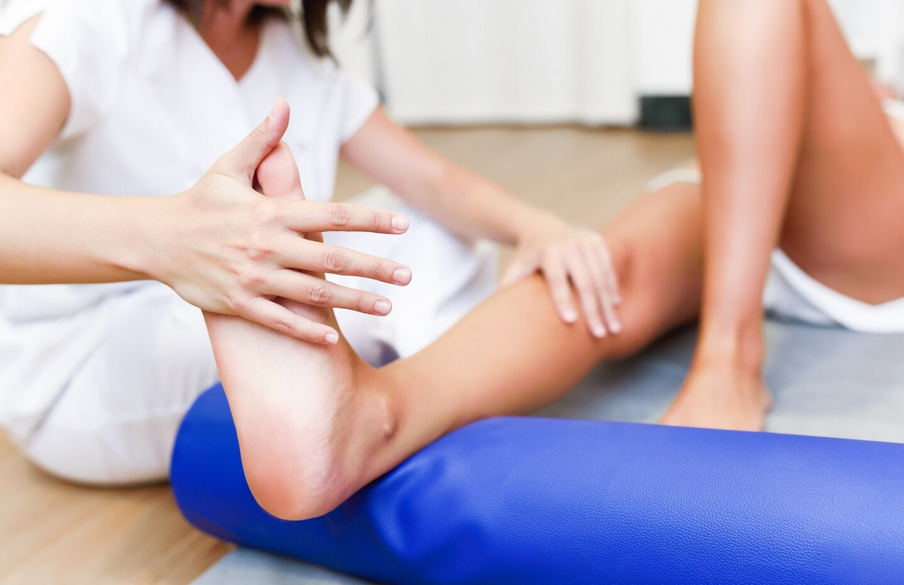
Physiotherapy is a great way to learn your areas of weakness or vulnerabilities and get help addressing them. Specifically for the ankle, you can focus on restoring ankle mobility and correcting compensation throughout the body. At PhysioNow, treatment typically includes:
- Comprehensive assessment: Your physiotherapist assesses range of motion, muscle length and tension, biomechanics, gait patterns, balance and coordination, muscular strength and more. This helps identify the extent of your ankle stiffness and how its affecting the rest of your body.
- Manual therapy: Hands on techniques can reduce stiffness, improve flexibility, break down scar tissue, reduce pain, and more. The specific techniques used will be decided based on the results of the assessment
- Home exercise plan: Targeted exercises focusing on your areas of need and goals will be given. These may includes stretching, mobility, functional, strength, balance, speed, coordination, power exercises and more! Your physiotherapist will work with you personally to decide.
- Movement retraining: If you have been compensating for a long time, you will have to unlearn your old compensatory habits. For example, you may have to readjust to proper mechanics for squatting, walking, running, sports movements and more.
Looking for help with an ankle?
Look for PhysioNow! We can help with sports injuries, ankle, back, knee, hip pain, and so much more. We have 10 beautiful locations across the west GTA including Burlington, Oakville, Mississauga, and Etobicoke. Our experienced clinicians can answer any questions you have and get you back to feeling and doing great. Find us at P: 289-724-0448 or E-mail: applewood@physionow.ca. Book with PhysioNow today for your first assessment and treatment!


Leave a Reply