
Why does shoveling cause many low back injuries each year?
While shoveling is a simple, everyday chore which Canadians need to endure each winter, it is also one which catches many people off guard. Unfortunately, shoveling can lead to many aches and pains, injuries to the shoulders, slips and falls, and last but not least, low back pain. As physiotherapists, we often see patients with injuries which can be prevented with some tips and improvement to their technique.
Why does such a seemingly easy task cause so many injuries, you ask? Well, for those unfortunate enough to be placed on shoveling duty, they’ll be the first to tell you how physically demanding of a task it really is. Shoveling requires repetitive pushing, lifting, bending and twisting of the back while carrying heavy loads. Not to mention, the freezing temperature causes our muscles to stiffen up, causing them to be more prone to strains and can even lead to more severe injuries like disc herniations. Finally, icy conditions can cause even the best techniques to fail from a sudden slip.
What low back injuries can occur from shoveling?
Muscle strains
- The most common and least severe injury
- Caused by repetitive loading or overstraining of the muscles in our lower back
Disc-related injuries
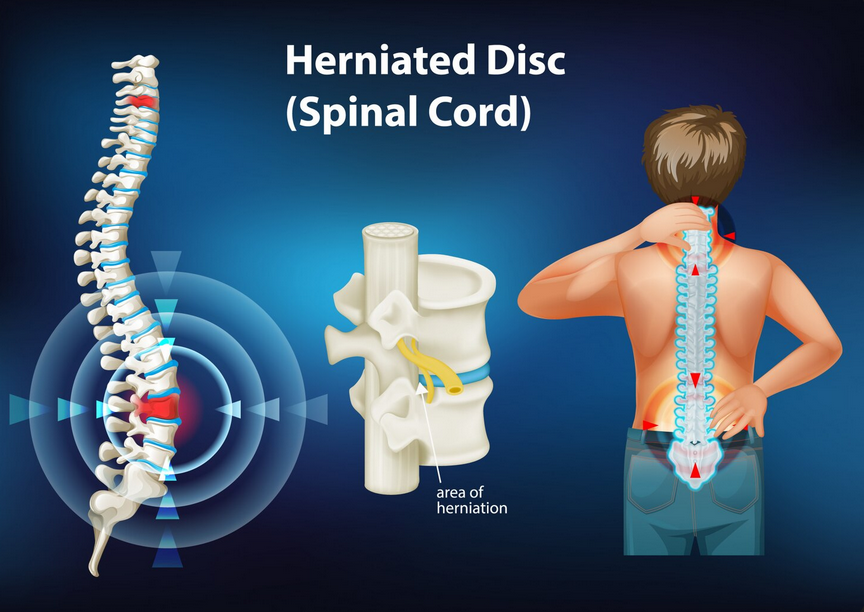
- Disc bulges and disc herniations can also occur again due to repetitive forward bending, or all in one moment from a too heavy load
- Disc herniations may then result in a pinched nerve, symptoms can include shooting pain, numbness or tingling down the leg on the affected side.
Fractures
- Lastly, slips and falls can lead to bruises and especially severe ones can cause fractures of the spine
- More common for older adults or those who have osteoporosis
Depending on the severity of the injury, it can take a few days, weeks or even months to recover in the order listed here. So instead of having to recover at all, why not prevent it in the first place?
Can we prevent shoveling-related back pain?
Shoveling is something that shouldn’t be taken lightly and unfortunately there are many people who are not able to complete the task safely due to the physical demands.
Training to shovel snow may sound silly but 2-3x a week of regular exercise (both resistance and aerobic) can go a long way in not only preventing low back injuries, but also serious cardiovascular incidents such as heart attacks. Keep in mind, if you are new to exercising you should check in with your doctor first before engaging in strenuous physical activity.
- Resistance/weight training- body weight, weighted, and/or banded exercises etc.
- Aerobic/endurance training – walking, jogging/running, biking, sports, swimming etc.
Warm up before shoveling
Now, you must make sure to warm-up your spine and muscles before you begin shoveling. While it might seem like extra work, a few minutes of movement and stretching can prevent a whole world of trouble for your low back. When preparing for a dynamic activity, it is always best to warm up with dynamic stretches, 10 repetitions on each exercise usually does the trick. Below is an example of a quick warm up routine, but feel free to make your own!
- Marching in place
- Hip circles rotating inwards and outward to loosen the hips
- Bending forwards to touch your toes, side bends, and arching backwards to warm up all aspects of your low back
- Body weight squats to warm up your legs
- Forward and backward arm circles to warm up the shoulders
Now that you’re all warmed up, let’s make sure we are shoveling with good technique!
Shoveling with good technique
Shoveling is very similar to lifting something off the ground.
- Avoid bending with your back and focus on hinging through your hips (keep a neutral spine)
- Always keep the shovel close to the body when lifting
- Push the snow away instead of lifting it when possible
- If you do need to toss the snow, make sure your back is facing straight forwards and avoid twisting to the side
- Shovel lighter loads of snow rather than heavier loads
- Pace yourself and take small breaks throughout
Cooling down and recovery
Once you’re done working your muscles, it is important to do a cool down to prevent stiffness and assist recovery. A great way to do so is with static stretching (compared to dynamic stretching like in our warmups). Hold each stretch for 30s and repeat 2-3 times as needed (roughly 5 minutes in total). Again, here is an example routine you can complete once back inside your house.

- Child’s Pose to stretch our back muscles: Start by being on our hands and knees (all fours position), then try to sit your hips back onto your calves while stretching your arms and hands forwards, and folding your torso down with your forehead resting on the floor
- Seated figure-4 stretch for our glutes and hip muscles: Cross one leg over the other in a seated position and lean forward as tolerated.
- Doorway stretch for our chest and shoulders: Have both forearms and hands up against a doorway with elbows bent around shoulder height. Get into a split stance and lean forwards.
If all else fails…
Now that you know how to prevent injuries while shoveling this winter, stay warm and safe out there everyone! Some general muscle soreness in the body is normal but if there is any lingering pain after shoveling, your friendly physiotherapists here at PhysioNow are here to assess, treat, and teach you how to prevent any future injuries! Please feel free to reach out to us by Phone: 289-724-0448 or Email: applewood@physionow.ca. Find us at any of our 10 clinics located in the west GTA including Burlington, Oakville, Mississauga, and Etobicoke. Book with PhysioNow today!


Leave a Reply