
Are you tired of dealing with stubborn joint or tendon pain that just will not go away? If you have been diligently doing your exercises and resting, but that nagging ache in your heel or elbow is still keeping you from your favorite activities, then shockwave therapy might help break the cycle.
What is shockwave therapy?
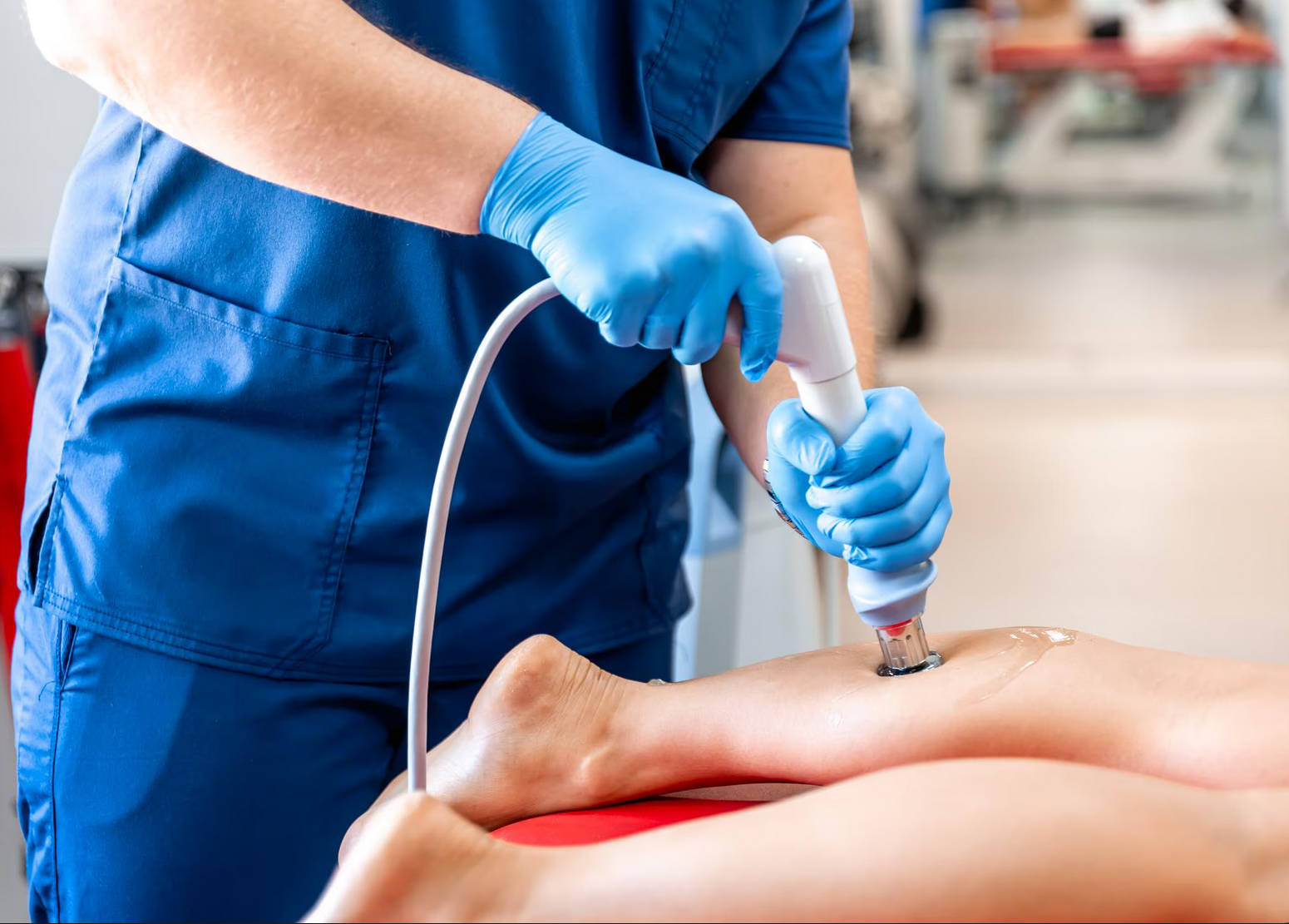
First things first, do not let the name scare you! Shockwave therapy does not involve electric shocks which is a common concern that we hear. Instead, it uses high-energy acoustic waves (sound waves) to affect the tissues. During a session, your physiotherapist applies a handheld device to your skin (pictured below) to deliver these acoustic pulses directly into the painful area.
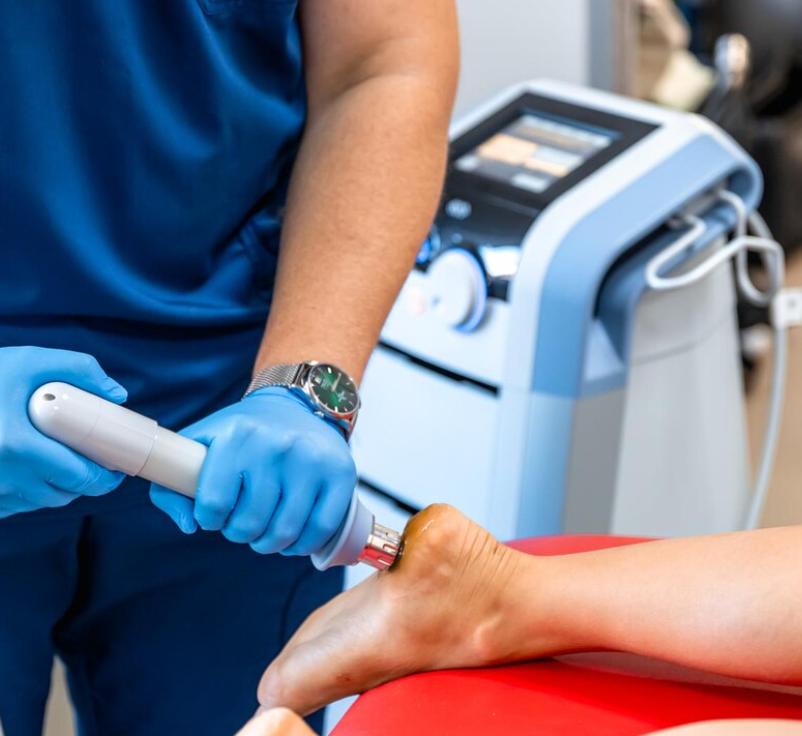
Think of it as a very deep, highly targeted micro-massage. These sound waves stimulate your body’s natural healing process by increasing blood flow, breaking down scar tissue, and encouraging cell regeneration. It is basically giving your body a jumpstart or restart to heal tissues that have been stuck in a state of chronic inflammation.
Who can get shockwave therapy?
Your appropriateness for shockwave therapy will be assessed by your health care practitioner. Usually, shockwave is used for musculoskeletal conditions, especially tendon issues and calcification. For example, we highly recommend it for:
- Plantar fasciitis (stubborn heel and arch pain)
- Achilles tendinopathy (pain at the back of the ankle)
- Tennis or golfer’s elbow
- Calcific tendonitis of the shoulder
- Jumper’s knee (patellar tendinitis)
Is shockwave just another wellness trend?
No! The scientific evidence behind shockwave therapy is vast and reliable. Shockwave therapy has a very robust track record in medical research, particularly for chronic tendon issues. Clinical studies consistently show that it significantly reduces pain and improves mobility for conditions that have not responded to standard care. It is recognized globally by medical professionals as a safe, non-invasive alternative to surgery or cortisone injections for long-standing tendon pain.
If you’re interested in a deeper dive into the subject, PubMed or Oxford Academic (created by Oxford University) have great systematic reviews on the topic.
How does it compare to other treatments?
If you have been to physiotherapy before, you might have experienced other types of clinic technology. Here is a quick look at how shockwave stands out from the rest.
Shockwave vs ultrasound
Ultrasound uses high-frequency sound waves to gently warm tissues and promote local blood flow. It is very gentle and often used for acute injuries or recent, mild strains. Shockwave, on the other hand, delivers a much stronger mechanical pulse. This makes shockwave far better suited for older, stubborn conditions where we actually need to physically break down scar tissue and restart the healing phase.
Shockwave vs. Electrotherapy (TENS or IFC)
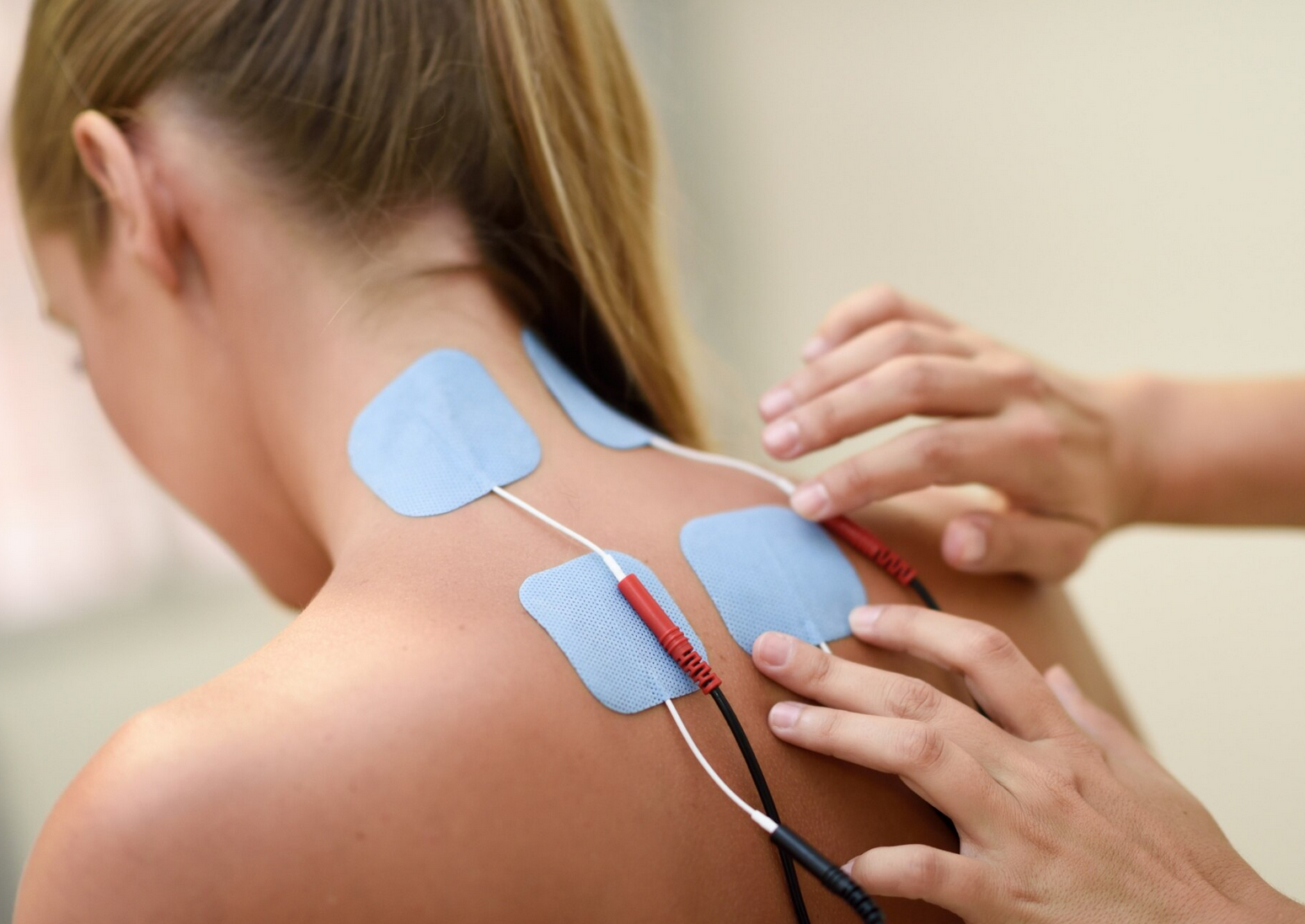
Electrotherapy machines use mild electrical currents to gently stimulate your nerves and block pain signals from reaching your brain. While electrotherapies are wonderful for temporary pain relief and soothing an irritated nervous system, shockwave therapy is actively working to remodel and heal the underlying injured tissue, addressing the root cause.
Shockwave vs. Laser Therapy
Laser therapy uses focused light energy to stimulate cellular repair and reduce inflammation. It is entirely painless and great for sensitive, acute injuries. Shockwave uses physical kinetic energy. While shockwave can be mildly uncomfortable during the brief treatment session, that mechanical energy is generally considered the gold standard for breaking down stubborn calcium build-ups and treating chronic, thickened tendons.
What does shockwave therapy feel like?
If you are feeling a bit nervous about your first session, rest assured that the process is straightforward and very quick. After applying a cooling gel to the area, your therapist will guide the applicator over the site of your pain. You will hear a rhythmic tapping sound and feel a localized pulsing sensation. While it can feel a bit intense or “achy” for a few minutes, your therapist can adjust the intensity to ensure it is manageable for you.
As for side effects, it is completely normal to experience some mild redness, swelling, or a temporary increase in soreness over the next 24 to 48 hours. This is actually a positive sign that your body is responding to the stimulus and beginning the repair process. Additionally, most patients find they can return to their daily routine immediately after leaving the clinic.
Curious about shockwave therapy?
PhysioNow is here to help! We are happy to answer any questions you have about the procedure. Shockwave therapy is ideally done alongside physical therapy to produce the greatest and longest lasting results. A consult with a physiotherapist can determine whether you and your condition are good candidates for shockwave therapy. Don’t let your nagging pains remain untreated, get help today!
PhysioNow offers same day appointments, direct billing, extended evening and Saturday hours, 10 clinics with free parking, and expert clinicians who care. Book with PhysioNow today for your first assessment and treatment! Or contact us at P: 289-724-0448, or Email: applewood@physionow.ca to find out more.