

It’s a dull, aching pain around your kneecap that you can’t quite touch. Runner’s knee, or clinically known as patellofemoral pain syndrome (PFPS), is a very common cause of knee pain. The good news is, it us very treatable especially if you catch it early. In this blog, we’ll break down what runner’s knee is, how it happens, and tips to avoid it whether you’re gearing up for a marathon of just getting into running.
What is runner’s knee?
Runner’s knee isn’t as specific of a diagnosis as say, a hamstring strain. It is an umbrella term for pain where the patella (kneecap) and the femur (thigh bone) meet and form a joint. Normally, our patella sits in a little groove on the femur, and slides up and down like a track. However, different forces can act on the patella, like a muscular imbalance or improper form, that causes it be pulled off track. This creates extra friction in the area which can lead to irritation, inflammation, and pain.
What are the symptoms of it?
- Dull pain in the knee, usually for the first couple minutes of exercise or after exercise
- Increased pain when walking downhill or down stairs
- Pain after sitting with the knee bent for long periods of time
- Grinding, popping, clicking in the knee
How does it happen?
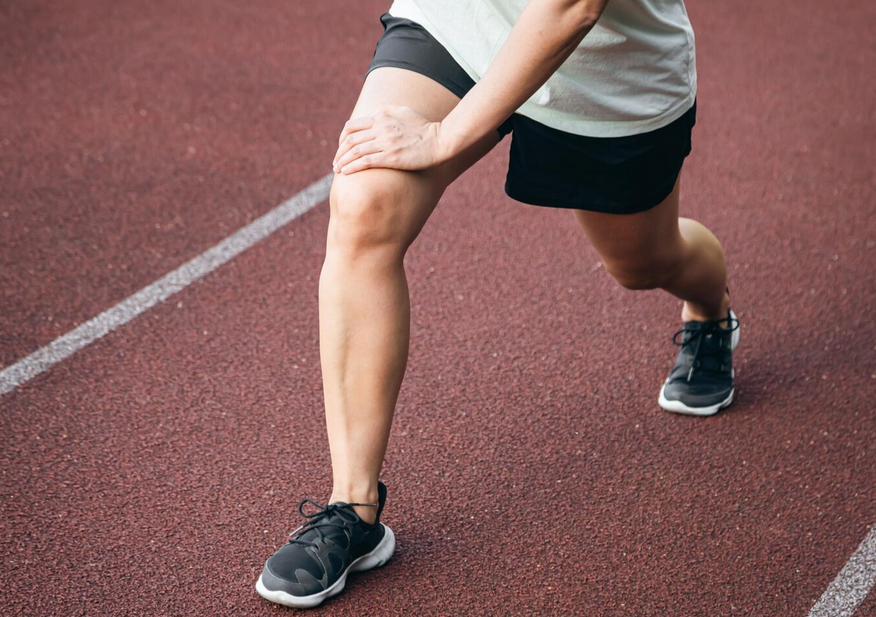
Usually, 1 of 2 things happens or a combination of both.
- Too much, too soon. You’ve recently increased your running mileage or intensity, and your body is not yet used to the new workload. The tissues in your body get overloaded, leading to injury and pain.
- Biomechanical imbalances. This causes tracking issues at the knee cap. Commonly, the hip stabilizer muscles are not activating well, causing the knee to fall inwards (aka valgus) when you put weight on the leg. In other cases, the foot collapses inward (aka flat feet or overpronation), creating a similar result. In either case, the patella is being pulled out of alignment which with repetition, can develop into a runner’s knee.
Tips for prevention of runner’s knee
Smart training habits can keep you out of trouble. First, follow a 5-10% rule when ramping up. As you increase your mileage, you should not increase by more than 5-10% from the previous week’s mileage. A gradual progression gives your body time to adapt, decreasing the risk of overuse injuries.
Secondly, make sure your footwear is in tip top shape. Recommendations include keeping a rotating set of 3 shoes to prevent wearing out too quickly, and to switch them out every 500-800 km. Over time, the shock absorption capabilities of your shoes will decrease, so keeping them fresh also helps to keep your joints healthy.
Third, a running assessment can be helpful if you notice irregularities in your gait. A trained professional like a Physiotherapist can watch your run pattern to see if it’s contributing to your pain. For example, factors that can be adjusted include position of the foot during heel strike, step length, correction of valgus or pronation, trunk position and more. Longer steps tend to put more force on the knee cap, and a Physiotherapist can help you make the required changes.
Finally, build in some cross training days. Don’t skip out on your strength training, strong muscles are resilient muscles. Additionally, don’t be afraid to give your joints a break while keeping your cardio up by hopping onto a bike for some sprints, or a treadmill for some incline walking. Cross training helps to give your commonly used running muscles a break while still being able to make progress in your training.
How is runner’s knee treated?
In a flared up runner’s knee, you will need to take some time off. If you jump on one leg and feel a sharp pain that you would rate a 4/10 or above, it’s your body’s sign to take a rest. Continuing to push through will only succeed in worsening the pain. Follow the principles of RICE (rest, ice, compression, elevation).
A Physiotherapist will help you assess the root cause of your knee pain, remember it can come from different sources even though the pain is happening at the knee. They will also give you rehabilitation exercises to start retraining your knee, and the associated muscles at the hip or ankle that are contributing to the issue. For example, teaching you glute activation and strengthening exercises, and how to keep the knee in good alignment while performing single leg activities. Other interventions will include manual therapies on the joint, soft tissue releases for tight muscles, and a personalized home plan including your rehab exercises and a back to run plan.
Need help with a knee pain or a runner’s knee?
Look for PhysioNow! We have expert clinicians ready to help you get back on track. We have 10 locations across the West GTA including Burlington, Oakville, Mississauga and Etobicoke. Whether it’s a new or old pain, rest assured you can find help here. Book with PhysioNow today for your first assessment and treatment of knee pain!