

Most of us have experienced a muscle strain at some point in our lives. It might have been after running too fast, changing directions quickly, picking up something too heavy. Muscle strains, especially in the hamstring, groin and calves, are common occurrences for soccer players. What about soccer stretches these muscles to and beyond their limits?
Why do soccer players experience muscle strains?
Muscles are composed of many different fibres that work together as a unit. Muscle strains occur when muscle fibres get overstretched or experience too much force. Due to the nature of soccer, these movements happen regularly.
For example, the quick starts, stops, and pivots all require muscles to be firing at full blast to generate and resist huge amounts of power. As these changes have to occur in split seconds, the muscles have to absorb then create this power in a very short amount of time, and repetitively over the course of the game. Additionally, the muscles will fatigue over time, reducing their capacity. All it takes is one moment for a muscle strain to happen.
Breaking down a soccer kick
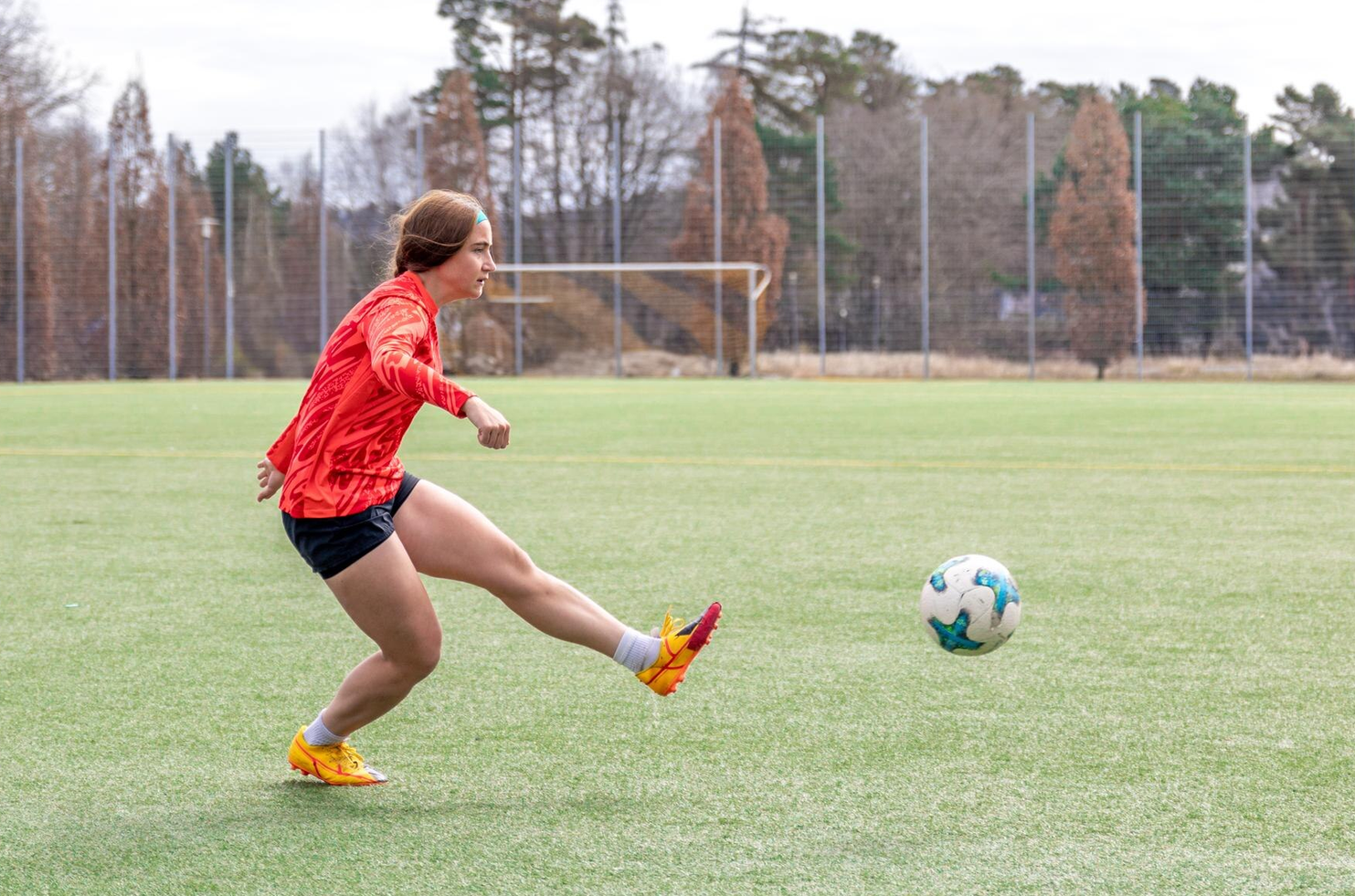
Muscles are the most vulnerable when there is a huge force going through them while they are lengthening. Let’s take a soccer player kicking a ball as an example. You may have seen someone kick a soccer ball hard, and then immediately grab the back of their leg as they feel a “pop” in the muscle. This is the muscle strain occurring. But what happened?
Your hip flexors and thigh muscles (quads) generate a big force to move your leg forwards and produce the kicking motion. But what happens to all that force? Where does it go after kicking the ball? Why does our leg stop instead of just continuing up and forwards? The answer is the hamstrings have to actively oppose the movement to slow the leg down. This scenario is exactly what we mentioned about where the muscles are the most vulnerable. The leg is straightening quickly during the kick, meaning the hamstrings are getting longer while also having to contract to stop the leg. If the hamstrings aren’t strong enough to oppose the kick, muscle damage will occur.
Can muscles strains be prevented?
We can never reduce the risk to absolutely 0, but yes, we can significantly reduce the chances of an injury happening! Sports physiotherapy is dedicated to not only treating sports injuries, but preventing injury in the long term as well. The general principles of prevention training include:
- Eccentric training: Muscles get strong specifically in the way we train them. Using our hamstring still as an example, this muscle normally bends our knee. A typical hamstring curl focuses on the bending phase. Eccentric training focuses on strengthening while the muscle is lengthening, or while the knee is straightening. In other words, we are teaching it to resist force as well as to generate it. This can include exercises like Nordic hamstring curls or eccentric focused Romanian deadlifts (RDLs)
- Dynamic warm ups: Before playing, a proper warm up has been scientifically proven to reduce the risk of injuries. It preps the nervous system and muscles for better movement patterns and body awareness. Specifically for soccer players, Fifa has developed a research-backed program to keep athletes healthy and at the peak of their game. Read more about the Fifa 11+ program here.
- Cross training: As with any activity, too much of one thing can be harmful. The repetitive stress on a muscle group can lead to an overtraining effect and put you at risk of an overuse injury. A well-rounded program will include strength and conditioning to ensure sufficient muscle strength, and other forms of cardiovascular activity other than running to give the lower body a break.
What happens if I get a muscle strain?
If you do get a muscle strain, it’s not the end of the world. Most muscle strains can be healed conservatively and return to play with no issues. Timelines of healing range from weeks to a couple months depending on how severe the strain is. Because the severity can vary so much and muscle strains are very easily made worse or reoccuring with improper care, we highly recommend seeing a Sports Physiotherapist to assess your injury. Based on specific tests, they can determine the grade (I-III from least to most severe) of your injury, provide personalised advice on how to take care of it, and what you should and shouldn’t do.
Looking for help with a sports injury or soccer muscle strain?
Look for PhysioNow! We have 10 locations across the west GTA including Burlington, Etobicoke, Mississauga and Oakville. All our clinicians are experts in rehabilitative care and offer services in Massage Therapy, Physiotherapy, Manual Osteopathy and more! Don’t miss out on anymore of your season and get back to doing what you love fast with PhysioNow. Book here today for your first assessment and treatment!