
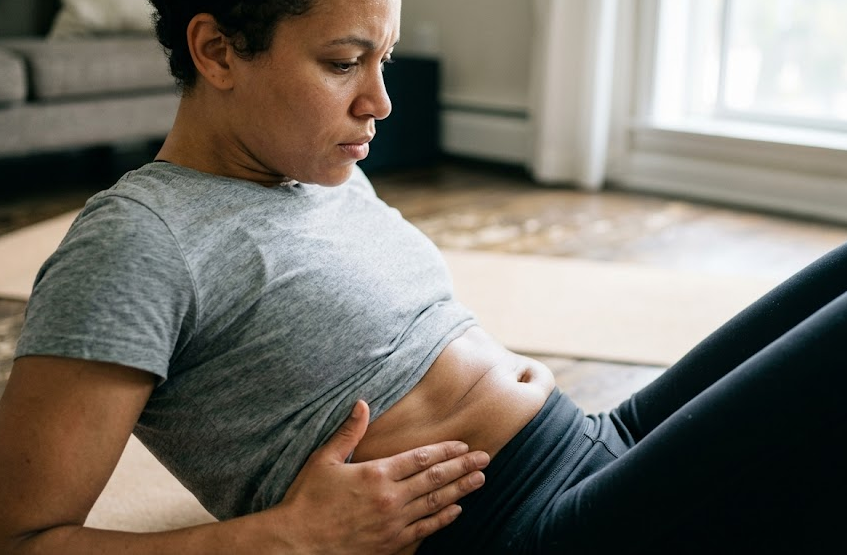
Diastasis recti is a common condition that affects many individuals, particularly during and after pregnancy. While it’s often discussed in postpartum recovery, it can also occur in men and individuals with increased abdominal pressure. Understanding this condition and how physiotherapy can help is key to a safe and effective recovery.
What is diastasis recti?
Diastasis recti refers to the partial or complete separation of the left and right sides of the rectus abdominis (think of your classic six pack) muscle. This occurs when the connective tissue between them, called the linea alba, becomes stretched, thinned and weakened.
This separation can lead to:
- A visible bulge in the abdomen at, above or below your umbilicus
- Coning or doming of the abdomen during activities like crunches
- Core weakness
- Poor posture
- Lower back pain
- Pelvic instability
While diastasis recti is painless, it can lead to functional issues and a change in physical appearance that may be undesirable.
What causes diastesis recti?
The most common cause is pregnancy, where the growing uterus places pressure on the abdominal wall. However, other contributing factors include:
- Improper form during core exercises
- Chronic straining (e.g., heavy lifting, constipation)
- Rapid weight changes
- Poor breathing mechanics
How do you know if you have it?
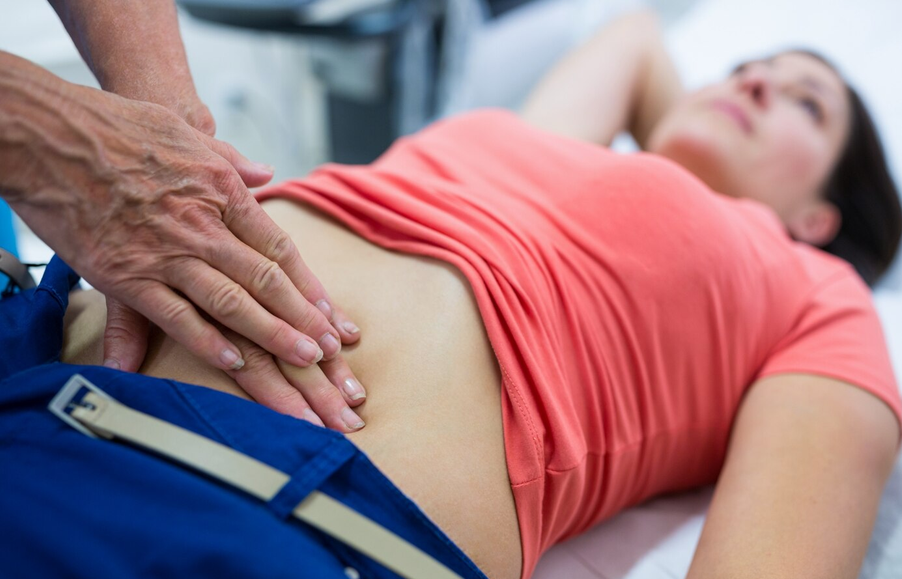
A simple self-check involves lying on your back with knees bent and gently lifting your head while feeling along the midline of your abdomen. A gap or soft space between the muscles may indicate diastasis recti.
However, a proper assessment by a Physiotherapist is recommended to:
- Measure the width and depth of separation
- Determine if separation is at, above or below the umbilicus
- Assess tension and function of the abdominal wall
- Identify contributing movement patterns
Why does physiotherapy matter for diastesis recti?
While the condition is painless by itself, that does not mean that it is harmless. A separation in the abdominals often means a change in its strength and function. As a result, Physiotherapy plays a crucial role in managing diastasis recti. Rather than focusing on “closing the gap” or the aesthetic of the condition alone, treatment emphasizes restoring function, strength, and coordination of the core.
A physiotherapist will guide you through a personalized program to help you return to your normal function. This may include breathing techniques to reduce intra-abdominal pressure, education on safe movement strategies for daily activities, and a gradual return to exercise.
There are also some specific exercises that are commonly used in the treatment of diastesis recti.
Some commonly prescribed exercises include:
- Diaphragmatic breathing
- Pelvic tilts
- Heel slides
- Modified dead bugs
- Core bracing techniques
Initially, it is important to avoid exercises that may worsen the condition, such as traditional crunches or sit-ups and heavy lifting without proper core engagement. Excessive strain without the proper core control and underlying musculature can increase the separation between the abdominals.
How long does recovery take?
Recovery timelines vary depending on initial severity of the separation, individual consistency with exercises, and overall health and activity level. On average, many people see improvement within 6–12 weeks with proper guidance, though complete recovery may take longer.
Looking for help with abdominal pain or diastesis recti?
You should consult a physiotherapist if you:
- Notice persistent abdominal bulging
- Experience back or pelvic pain
- Feel weakness during daily activities
- Are returning to exercise postpartum
Early intervention can prevent long-term complications and improve outcomes. Diastasis recti is a manageable condition with the right approach, so look for PhysioNow today! We have expert Pelvic Physiotherapists ready to help you recover whether you’re looking for advice pre or post partum. We have 10 locations across the West GTA, including Burlington, Oakville, Mississauga, and Etobicoke. Book your first assessment and treatment today! Or contact us at P: 289-724-0448 or Email: applewood@physionow.ca for more information.