

Getting that x-ray back with a diagnosis of osteoarthritis (OA) of the knee or hip can be alarming. Maybe you’ve also started to notice some persistent pain, and daily movements like stairs are starting to become harder. Rest assured, surgery is not the immediate next step. Physiotherapy treatment and conservative management is the first line treatment for hip and knee OA.
Understanding hip and knee OA
Simply put, OA involves natural wear and tear in the joints over time. The cartilage and joint surfaces change over time and show signs of degeneration. Thankfully, we now know that these structural changes are not the whole story. Even though an x-ray may show these signs, it does not automatically mean there is an issue. More importantly, you can have signs of OA without feeling pain or discomfort at all and there is something you can do about it. Ultimately, the strength of the muscles and tissues around your joint is what matters the most to how you move and function.
How does physiotherapy treat OA?

More and more we are understanding that regular strength training is the key to building resilience around the joint. Here’s how physio can help:
- Strengthen: Even though the joint changes may be there, the load support comes from the surrounding musculature. This means strengthening the quads, hamstrings, calves, hips, and core. These muscles can replace the shock absorption for the joint, offloading stress from it
- Mobility: Motion is lotion, joints need this stimulation to stay healthy. Movement helps produce the joint fluid that lubricates the joint and gives it nutrients. A regular mobility program can improve lost range of motion and reduce morning stiffness.
- Education and activity modifications: OA is not a condition that goes away completely, it’s something that you will have to manage. Your Physiotherapist will help you figure out what activities in your life may have to be temporarily sidelined to avoid overuse, and when it is safe to go back to it again
- Gait aids and braces: We want you to be as independent and stay in touch with all your favourite activities as much as possible. Sometimes, this may involve doing things with a bit of help. Whether it’s going for a walk outside, or playing tennis, an aid like a walker, cane, or custom brace may help.
How does physiotherapy prevent or delay surgery?
Physiotherapy can either delay, or completely prevent the need for a total joint replacement. The earlier you start with rehabilitation and strengthening, the better it is. Major health organizations like the Osteoarthritis Research Society International (OARSI) recommended structured physical therapy and exercise plans as gold standard treatments for OA.
People who participate and complete these programs can delay their surgery for years, or even are able to forgo it completely. Worst case, if surgery is still necessary, research has shown that patients who engage in training beforehand have quicker recovery and better outcomes post-surgery.
What can I expect in a Physiotherapy session if I have hip or knee OA?
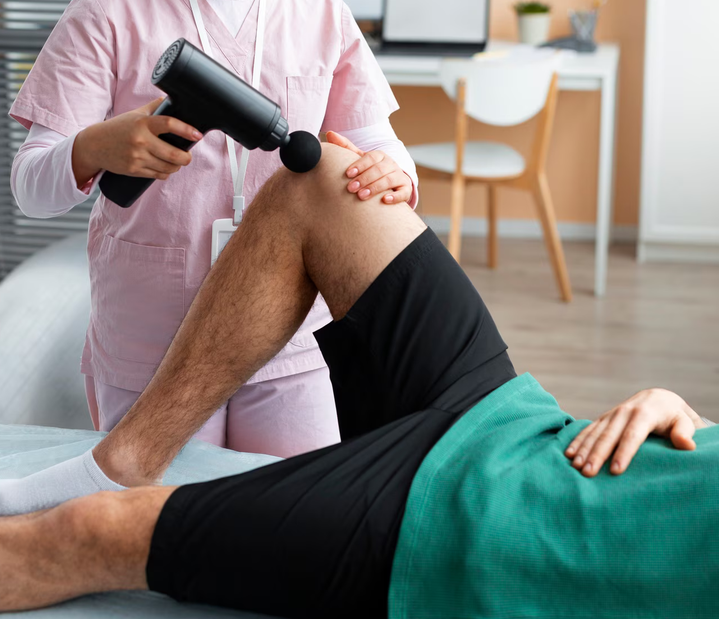
If you’re new to Physiotherapy, no worries! We’re here to help you and answer every question you may have. Here’s a general outline of what to expect at your first session.
- Comprehensive assessment: Your physio will ask you questions about your current symptoms, function, and goals. They will gather any relevant information about your medical history, previous injuries, and more. Afterwards, they will conduct a physical evaluation of your range of motion, strength, balance, and function.
- Creating a treatment plan: After the assessment, your physio will use this information to create a personalised plan for you. Based on your areas of weakness and goals for the future, a week by week plan will be presented to you.
- Treatment: Treatment will happen on the very first day. This part will be very individualised based on your unique factors. This part may consist of manual therapy, electrotherapy, cryo or heat therapy, and exercises. Here, your physio will also teach you your home exercise plan including cardiovascular training, strength and mobility work, and more!
- Outline for the future: Finally, there will be time for questions and your physio will educate you on what to expect in the future. They will tell you how often you will need to come in, and what the expectations for progression are.
Looking for help with a hip or knee OA?
Your hip or knee is something we can work on, it doesn’t have to be what stops your life. If you’re looking to improve your quality of life, get stronger, and delay a surgery, look for PhysioNow! We have expert clinicians at 10 locations across the West GTA to help. Look for us in Burlington, Oakville, Mississauga and Etobicoke. Book with PhysioNow today for your first assessment and treatment!