
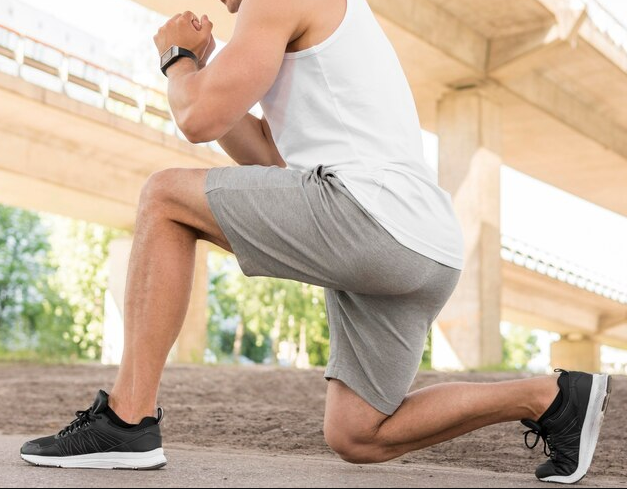
Anterior cruciate ligament (ACL) surgery is many an athlete’s worst fear, and a very common sports injury. The dreaded plant and twist injury, The biggest question on people’s minds at this point is how long does surgery take? Will I be able to play sports again? Will my knee be permanently injured? Importantly, not every ACL tear is automatically a surgery, but once it’s been determined to go the surgical route, here’s what you need to know!
How long does ACL Rehab take?
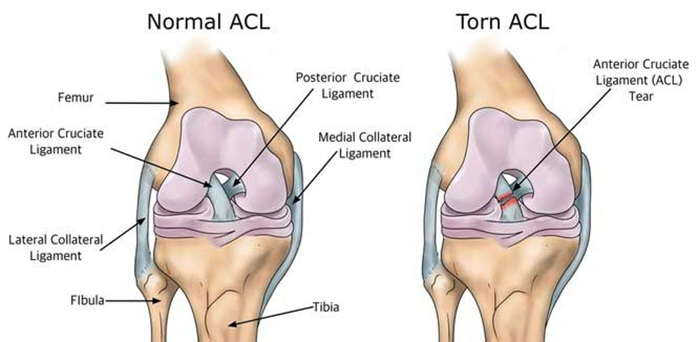
Typically, ACL rehab is quite lengthy taking 9-12 months or even longer. Instead of strict time-based measurements, progress is determined by your ability to hit key rehab milestones. These include specific range of motion, strength, and functional requirements that must be seen in order to move to the next stage. If progressed too quickly, the risk of injury becomes much higher. As a result, the key to a safe and full recovery comes through a structured rehabilitation program with the guidance from a Physiotherapist.
Next, we’ll go over the different phases of ACL rehab to make sure you’re well prepared for the process.
Phase 1 (0-2 weeks): Protect and reactivate
This focuses on managing pain, swelling, and inflammation, while working on restoring knee extension and the quad (thigh) muscle. During this time, most patients are on crutches for 7-10 days or until pain is tolerable. The milestones for this phase usually are:
- Knee mobility: As quickly as possible, you want 0 degrees of extension (fully straight), and about 90 degrees of flexion. Ultimately, the emphasis is on the straightening in this phase
- Quad activation: Ability to contract the muscle fully on command
- Gait normalization: Transition to a crutch-free walk by the end of this phase
Phase 2 (2-6 weeks): Strength and mobility
This phases focuses on building the foundations for movement. Rehab exercises include strengthening with light weights, balance, and more aggressive mobility exercises. During this time, aerobic conditioning may be added such as cycling, pool work, elliptical and light treadmill work. The goals for this phase are:
- Knee mobility: Near or normal ROM in knee movements by the end of the phase
- Normal gait: Painfree, no limping, and no use of gait aids
- Initiation of cardio training
Phase 3 (6 weeks to 3 months): Preparing for sport
In this phase, the focus is on continuing to build muscle and ensuring the exercises are sufficiently challenging to prepare for sport.
- Knee mobility: Should be full and painfree
- Functional quad strength: Weightbearing and weighted exercises like squats, lunges, leg presses
- Proprioception training: Training the knee on unstable surfaces, wobble boards, single leg balances help rebuild the joint awareness
- Limb symmetry: The injured side should be >70-80% of strength co mpared to the other side
Phase 4 (4-6months): Plyometrics, agility, and sport specific drills
In this phase, exercises for jumping, speed, and agility become the focus along with sport specific drills. Strengthening is still present but now these exercises help your muscle become resilient to high speeds, forces, and quick changes in directions. The return to sport criteria are usually:
- Strength symmtery: Injured side >90% compared to injured leg
- Single leg hop tests: Your injured side must perform >90% as well as the uninjured side
- Movement quality: No obvious movement deficits should be seen when landing, cutting, jumping
Keep in mind these are general guidelines and each individual will progress at a different speed. Additionally, different surgeons and hospitals will follow different protocols depending on their preferences and techniques. Some may take shorter or longer to return to sport, the important thing is to ensure that the appropriate milestones are being met before progressing. Check ins with your surgeon will be periodically scheduled to ensure integrity of the graft and to monitor the rehab process.
Do I need a brace after ACL reconstruction?
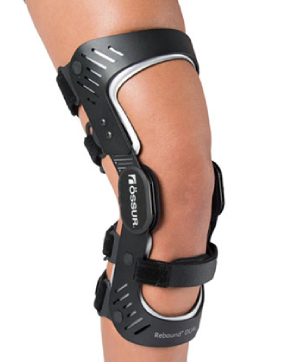
It’s dependent on both the patient and surgeon. Most people end up wearing a brace for at least a part of the rehab process, some may also choose to wear one on their first return to sport. If you have to wait for surgery, you may also choose to get one prior to the surgery to help stabilise the knee and prevent further injury. For the most part, it depends on your individual goals, comfort level, and your surgeon’s preferences as well.
Waiting on an ACL surgery?
Look for PhysioNow! You can get started with Physiotherapy even prior to the surgery. The stronger and more functional you are prior to the surgery, the easier the post-op recovery process. Our expert Physiotherapists will be with you every step of the way, answering your questions and guiding you back to a normal life. ACL rehab is a long journey, so get started today!
PhysioNow has 10 locations across the West GTA including Burlington, Oakville, Mississauga, and Etobicoke. Book with PhysioNow today for your first assessment and treatment!

