
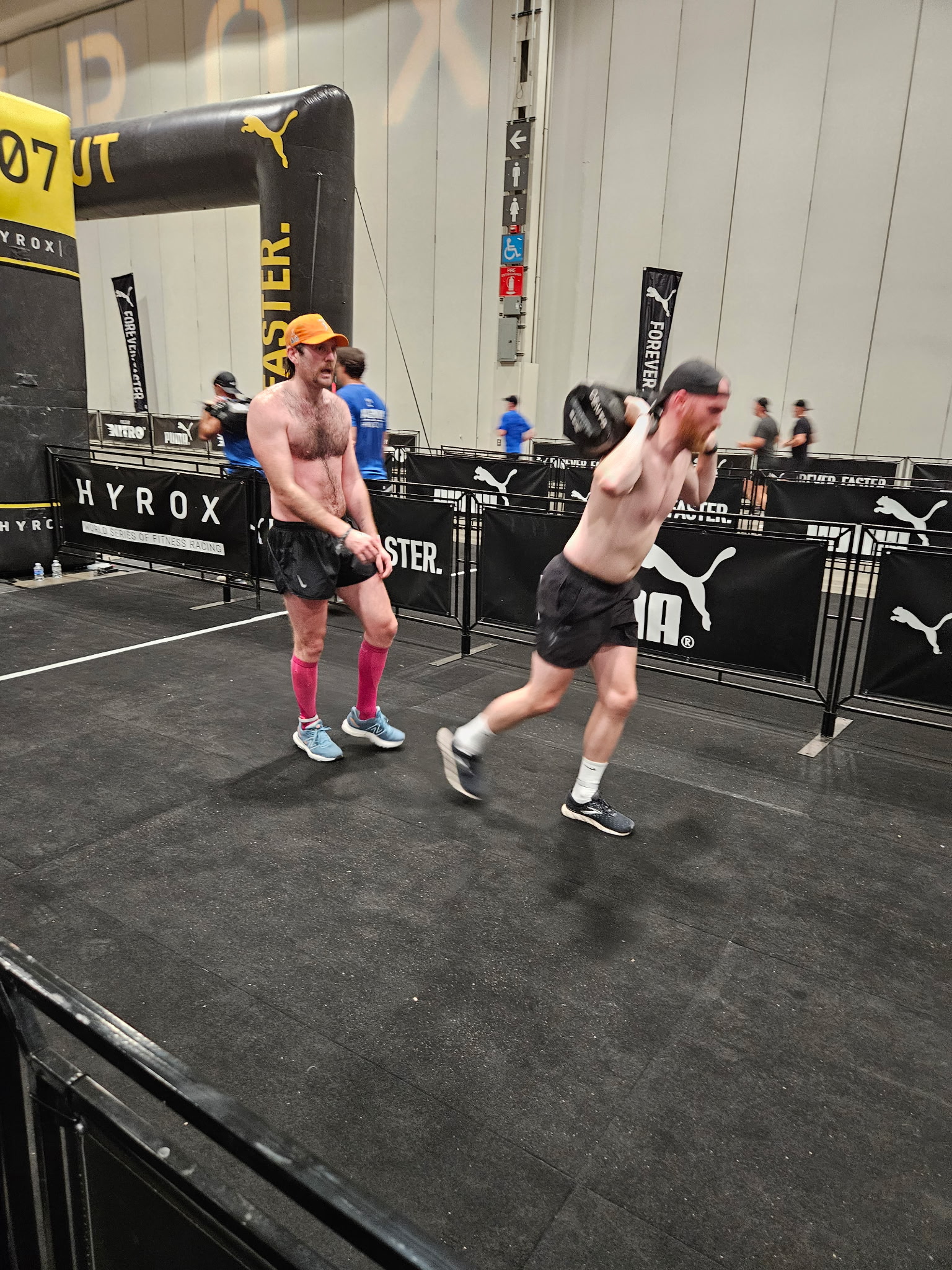
It’s been all over social media and people can’t stop talking about it! HYROX has been called the ultimate test of fitness as it combines 8km of running with 8 different exercises to create a punishing, but rewarding workout! Completing a HYROX event is a big accomplishment, pushing athletes to their power, strength, and endurance maximums. However, this type of training puts the body under an incredible load and recently, us Physiotherapists have seen a huge increase in overuse related injuries with HYROX athletes.
What kind of movements are done in HYROX?
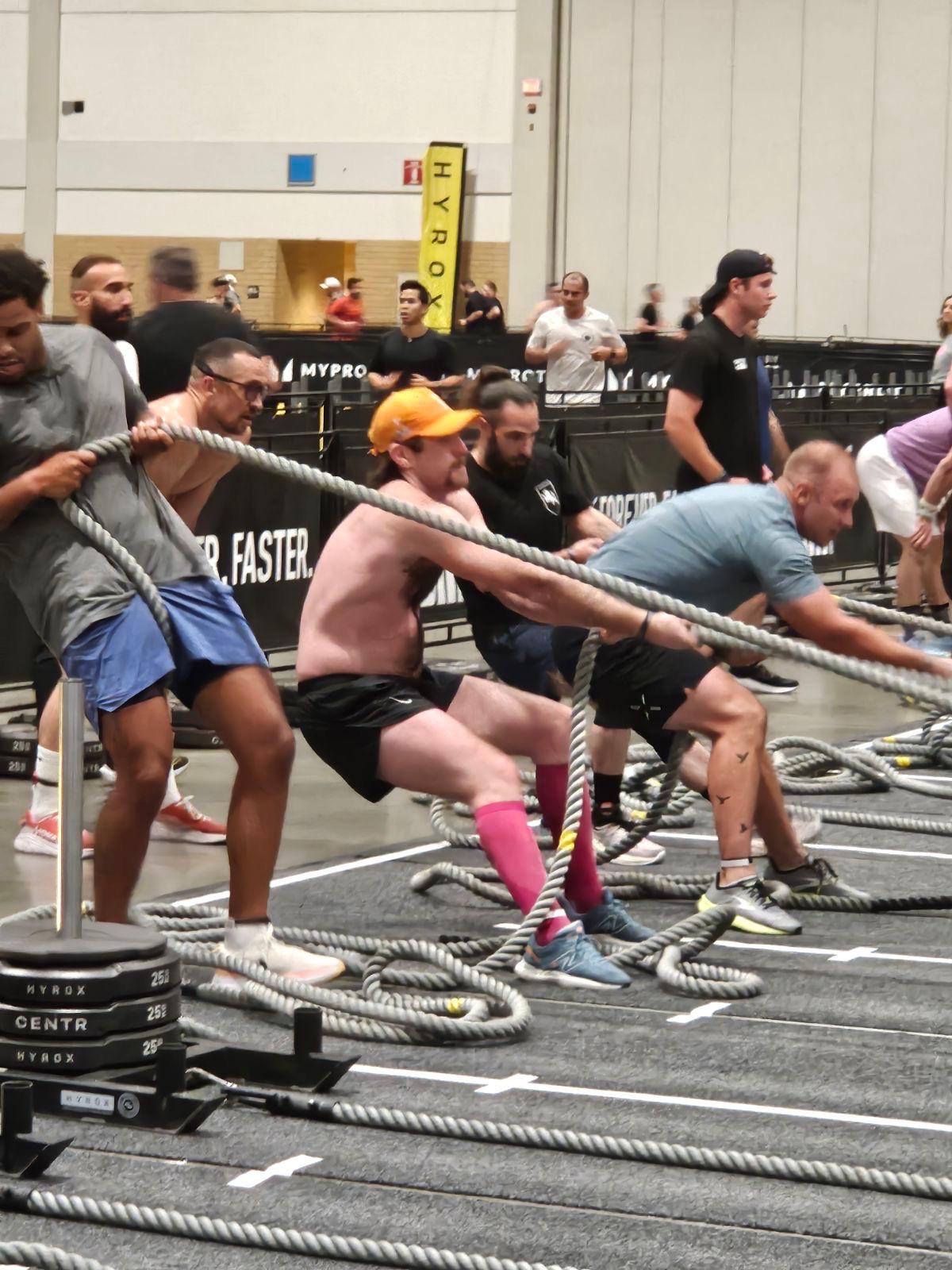
Hyrox has a standardized race sequence. 8km of running are split into 1km intervals, with a functional exercise slotted in between each run. Usually, the exercise sequence goes as follows:
- 1km ski ergometer
- 50m heavy sled push
- 50m sled pull
- 80m burpee broad jumps
- 1km rowing
- 200m farmers carry (with kettlbells)
- 100m sandbag lunges
- 100 wall balls
As you can see, this list is pretty exhaustive. With average finish times around 1 hour 30 minutes to 1 hour 45 minutes and pushing yourself in a race, it’s easy to see how people can injure themselves.
What kind of injuries are common in HYROX athletes?
In the clinic, we see a lot of overuse or acute strain (still related to overuse) type of injuries, especially in our athletes preparing for their events. We say mostly musculoskeletal injuries spread out across a lot of different areas of the body. We’ll go through a brief summary of the most common ones:
- Achilles tendon or calf injuries: High amounts of running alongisde lots of explosive movements puts the calf at a higher risk.
- Patellofemoral pain syndrome: Knee pain is common from all the heavy weighted movements involving knee bending. As the muscles fatigue during their race, hip stability can suffer and cause a shearing force at the kneecap
- Lower back pain: HYROX involves a lot of weight and a lot of full body exercises. If your core isn’t up to the task, your lower back will start to compensate and take on the load, resulting in back pain
- Rotator cuff issues: Lots of overhead movements and weightbearing like in the burpees puts stress on the shoulders. Without the baseline strength to support these movements, the shoulder may easily become overstressed
I’m training for an event, how do I avoid an injury?
To stay injury-free, the most important factor is load management. This means not increasing your weights or volume too fast too quickly. When we workout, our body needs time to adapt by repairing damaged stuctures and allowing them to build up their endurance. We recommend not increasing weights our volume by more than 10% of your previous training’s per week. If you’re a total beginner, you might need to go even slower.
Secondly, you should have someone check your form. Either grab a buddy at the gym or set up a camera to film yourself. Bad technique combined with fatigue is a recipe for disaster. If you don’t know how to perform a proper squat, lunge or hip hinge movement first these should be your priorities before attempting the HYROX movements.
Additionally, you should plan for deloading/recovery weeks every 3-4 weeks. It’s impossible to keep your body performing at 100% all the time, there’s not enough time for recovery. Periodization is cornerstone of all types of training and is now a systematic approach to boost performance. In short, we have researched how the body responds to stress and created guidelines for training in order to maximize performance gains while minimizing the risk of injury.
I need help recovering from an injury!
If you are looking to get into HYROX or are currently experiencing an injury from HYROX, look for PhysioNow! We have 10 locations across the West GTA including Burlington, Oakville, Mississauga and Etobicoke to help. We have expert clinicians that can help you resolve your issue and achieve your goals, whether you’ve had this problem recently or for a long time. Book with PhysioNow today for your first assessment and treatment!