

It can be a nagging pain, an ache, or a sharp sensation at the back of your heel. The Achilles tendon and it’s associated injuries is one of the most common running injuries, especially in men. Our Achilles is the strongest tendon in our body, giving us the ability to store and release injury during runs, jumps and all kinds of athletic activities. Due to these high amounts of forces our Achilles must undergo, it makes it prone to overuse. In this blog we’ll cover the basics from what Achilles tendonosis is, how to treat it, and training + shoe tips to help avoid injury in the future.
How do tendons get injured?
Tendon pain does not develop out of nowhere, most times it is due to an sharp increase in stress experienced by the tendon. In practical terms this usually means an increase in training volume or intensity, or maybe even a change in running surface or shoes. Currently, researches and clinicians follow a model called the Tendon Continuum Model to understand what is going on in the tendons.
The first stage is called reactive tendinopathy. This is the short-term response after your increased training that results in some swelling and stiffening. Thankfully, there is no actual damage to the tissue at this stage. Additionally, it is also quickly and easily reversible when treated this early on.
If not managed properly and if loading continues to outstrip recovery, the tendon will enter further stages involving worsening degeneration and symptoms. Eventually, the tendon can become so compromised that a full tear in the Achilles can occur.
When do I have to stop running with heel or Achilles pain?
Total rest is often not the answer, but it’s difficult to know on your own what is helping and what is making it worse. This is where an experienced physiotherapist can come into play. Your Physiotherapist can conduct a full analysis and assessment to determine if your symptoms warrant a full stop. Usually, this would include:
- Pain with a single leg hop
- Pain immediately with running that doesn’t go away
- Pain is worsening generally over time
- The pain or injury has occurred recently, in the past 2 weeks
- Pain is a 5/10 or above
- Pain remains even into the next day after a run
Your Physiotherapist will help you interpret the signs and can create either a modified run program, or give you instructions on rest and then a return to run plan.
Can a Physiotherapist help me return to running pain free?
Yes, definitely! In addition to return to run, Physiotherapists are experts at assessing strength, mobility and general function. There may be other biomechanical factors affecting your injury including your footwear, gait pattern, strength or mobility deficits, and more. For example, someone with poor ankle stability might be collapsing into their foot, causing the Achilles to compensate. Finding the root cause helps alleviate the pain as well as making the body more resilient to injury in the long term.
Your Physiotherapist may choose to perform a gait analysis to check your running pattern. They can watch the way you run and correct issues such as overstriding, correct cadence, and provide footwear recommendations based on your foot strike pattern.
Finally, your Physiotherapist will give you advice on how to return to run or how to start ramping up your runs again safely. The most common issue is people returning too quickly and too much all at once, prompting a flare up or another injury. Your Physiotherapist will help you find the right balance that challenges the tendon to get stronger without causing a flare up.
What exercises should I do for Achilles tendon pain?
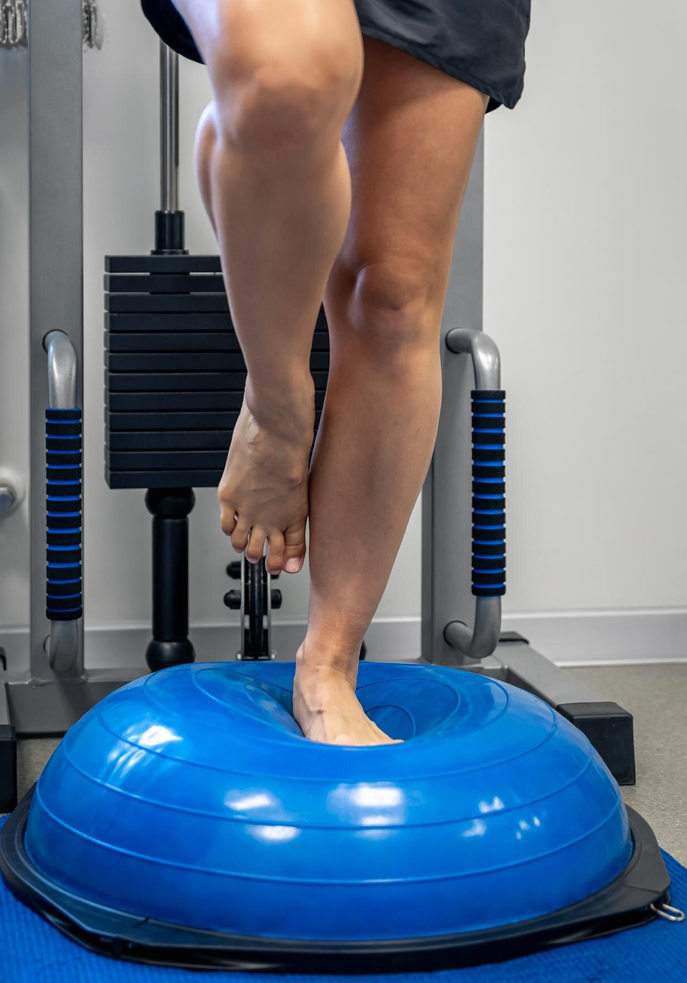
Current research shows that tendons heal best when they are being challenged. Depending on the initial severity and irritability of the condition, the exercises will look best for each individual. Ultimately, the end goal is to get the tendon to perform heavy, slow resistance exercises. Essentially, as much weight as you can handle and as slowly as possible creates the best adaptations in the tendon to get stronger. Usually, these exercises are some variation of a calf raise, with additional strengthening for the hip, knee, ankle, and core if warranted.
Ultimately, building a more resilient tendon is the end goal, but the program to get there will look slightly different for each person.
In addition to exercises, you might be eligible for shockwave therapy which research has shown can be helpful in chronic Achilles tendon issues.
Looking for help with Achilles pain or a running injury?
Look for PhysioNow! Your Physiotherapist can help you regardless of your run and injury experience, whether you’re just trying to recover from an injury, prevent an injury, training for a race or just a casual runner. We have 10 locations across the West GTA including Burlington, Oakville, Mississauga and Etobicoke. Book with PhysioNow today for your first assessment and treatment!