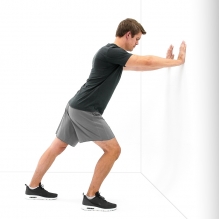

Whether you’re a long time runner, or just getting into it now, you may have experienced the frustration of a pain in your shins. Shin splints are a common overuse injury in the running community, usually due to a new or a change in the training routine. Shin splints can be very frustrating to deal with as they can quickly ramp up in severity if ignored, and take you away from your normal routine to recover. In this blog, we’ll discuss the difference between shin splints and stress fractures in the bone, how to identify which one you have, and how to use Physiotherapy Treatment to rehabilitate your injury.
Why do shin splints and stress fractures happen?
Primarily, shin splints and stress fractures are called overuse injuries. Due to the nature of running, high impact and repetitive, the bones and muscles are forced to absorb a lot of force for sustained periods of time. Our bodies are usually very good at this and can repair itself from a lot of stressors.
However, an overuse injury occurs when the rate of breakdown outstrips your body’s speed at repairing itself. For most runners, it’s usually because of a recent increase or change in their training. For example:
- Increasing mileage too quickly
- Adding new types of workouts too quickly (ex. sprints, hills etc)
- Not taking enough rest days and weeks (common while training for extended periods like preparing for a race)
- Changing the training surface (road vs trail) or footwear (worn out or change in shoe specs) too quickly
What are shin splints and stress fractures?
Commonly, people view this as 2 separate conditions but research has shown that they are 2 injuries on the same continuum. On the bone stress continuum, shin splints are located on the more minor end, and a lack of treatment can lead to the development of a full stress fracture.
What does a shin splint feel like?
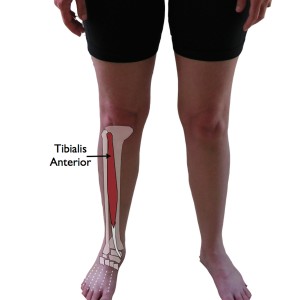
A shin splint occurs when the muscles and tendons that attach to the shinbone become inflamed from the repetitive impact. It will feel like a dull aching pain across the front of the shinbone. The characteristic pattern is a warm up pain for a couple minutes at the beginning of a run, fades as you get into the run, and then aches again after the run
What does a tibial stress fracture feel like?
If the initial shin splint is ignored, the bone itself starts to form micro cracks which can turn into a stress fracture. Unlike popular belief, there does not have to be some sort of traumatic event for there to be a fracture. Despite the different mechanism, a stress fracture is still a fracture and should be treated seriously.
A full stress fracture will feel like a very sharp, intense, pain on top of the shinbone. You are usually able to pinpoint it with a finger, and it is easily repeatable with touch everytime. This pain will NOT go away when you try to push through, and even daily activities will start to bother it such as walking, stairs, hopping on one leg etc.
How can Physiotherapy help?
First, a Physiotherapist will help you identify how severe your issue is. They will perform an detailed assessment to determine the severity and root causes of your issue. The components of Physiotherapy treatment for shin splints or a stress fracture usually includes:
Load management and back to run programming
Based on their findings, they can determine whether you need to stop running or can continue in a modified fashion. A stress fracture needs to be offloaded for a time so cross training can be implemented such as swimming or biking. A shin splint may be allowed to continue but at a reduced capacity or with a change in footwear to better protect the area
Strengthening and mobility:
The bread and butter of any Physiotherapy program is the home exercise plan. This is the personalised plan that gets you better and helps you stay better in the long run. Your shin splints could be being influenced by other body parts such as a hip, knee, or ankle instability, causing increased loading at the shin. Your Physiotherapist will capture this in the assessment and provide you with an individualised plan
Manual therapy
Your Physiotherapist will use manual therapy techniques such as soft tissue massage, joint mobilisations and more. These are helpful for pain relief, addressing joint and mobility restrictions, releasing tight muscles, and increasing blood flow into the injured area
Gait retraining
Your Physiotherapist can perform a gait assessment to determine if the mechanics in the way you run may be contributing to your pain. Areas of focus might include the type of footwear, where you land on the foot (heel vs midfoot vs forefoot striker), cadence, stride length and more. For example, someone who lands with their foot well in front of them produces a hard braking force through their leg with each step, jarring the shin. Your Physiotherapist can coach you through making these changes to produce the most efficient gait possible

Quick tips for avoiding overuse injuries
Prevention is always the best form of medicine. Too much and too soon are the hallmarks of an overuse injury. Key tips for reducing risk include:
- 5-10% increase rule: To avoid overtraining, recommendations are to increase weekly mileage by 5-10% maximum each week
- Adding recovery days and deloading weeks: If you are training for an event like a marathon or half marathon, your training should be spread out over a long period of time. Your body can’t keep performing at 100%, 100% of the time. Having enough recovery days and 1 lighter week every couple of weeks helps your body recover from all the heavy impact
- Rotate and replace your footwear: Experts recommend replacing every 500-800km as cushion and soles start to wear down over time, reducing the protective power. In addition, rotating footwear helps make the change between a fresh and old pair less disruptive
- Listen to your body: If you feel that nagging ache coming on already, don’t just ignore it. As we have stated, shin splints are an early point on the continuum where it is easier to catch. The more severe the issue, usually the longer it takes to recover. Take care of things earlier and you won’t have to miss out on training!
Looking for help with leg pain, running pain, shin splints, or stress fractures?
Look for PhysioNow! We have 10 locations across the West GTA including Burlington, Oakville, Mississauga and Etobicoke to help. We have expert clinicians that can help you resolve your issue and achieve your goals. Whether you’re training for a race or just a casual runner, we can help! Book with PhysioNow today for your first assessment and treatment!