

Tag Archives: Shoulder Injury

Rotator Cuff and Shoulder Injuries: Do I Need Surgery?

Shoulder injuries from rotator cuff tears are something we commonly see in the clinic. Whether it’s from playing a sport, an overuse injury from work or daily life, or just lifting something too heavy, rotator cuff injuries can happen for a wide variety of reasons.

Unfortunately, there is a lot of fear around shoulder injuries, especially after getting an ultrasound done and seeing words like “tear,” “degeneration,” and “tendinosis.” Understandably, the question then becomes, will I need surgery? Thankfully, surgery is only reserved for very specific and severe cases of shoulder injury. In the vast majority of cases, conservative management with Physiotherapy is the gold standard of treatment.

What is a rotator cuff injury?

The rotator cuff is made of 4 muscles and their tendons around the shoulder joint. Sometimes, they are called the SITS muscles, an acronym for supraspinatus, infraspinatus, teres minor, and subscapularis. Each muscle has a slightly different function, but altogether their job is to hold the arm bone inside the shoulder socket while the arm moves.

A rotator cuff injury usually falls into 2 issues.

  1. Tendinopathy: A general term to describe a pathology and degeneration with the tendon.
  2. Tears: The tear can be partial thickness (incomplete) or full thickness (complete). Partial means part of the tendon is still intact, full means the tendon has been completely severed and is a more serious condition.

These 2 conditions are also not mutually exclusive. Long term tendinopathy leads to a higher chance of a tear happening, as the tendon health becomes compromised. Similarly, a tear that does not undergo proper rehab may not heal to 100% and lead to tendinopathy.

What are the symptoms of a rotator cuff injury?

Generally, you may have a rotator cuff injury if you have:

  • Pain when reaching overhead
  • Difficulty sleeping on your side
  • Pain is worse at night
  • Difficulty putting clothes on, especially a bra or a jacket
  • Difficulty lifting or carrying
  • Clicking or popping in the shoulder

How long does a rotator cuff injury take to heal?

Generally, anywhere from 6-12 weeks of rehab is needed, depending on the nature if the injury. More severe or chronic conditions may land closer to the 12 weeks time period, while smaller acute tears may recover in 6 weeks. Your shoulder will likely pass through several stages of rehab. Keep in mind these may overlap.

  1. Pain control and restoring range of motion
  2. Strengthening and scapular mechanics
  3. Strengthening and weight training
  4. Sport-specific training

Surgery or physiotherapy, how do I know?

Research has shown that for partial tears and chronic tendon degeneration, conservative care with physical therapy is the first choice. With the help of a Physiotherapist, many patients can return to their daily activities and sports. Treatments may include targeted strengthening exercises, mobility exercises, manual therapy, and more!

Surgery may be indicated in a highly traumatic injury causing complete or large tears to multiple tendons. Additionally, a huge loss in function and range of motion ofthe shoulder suggests a higher severity. Finally, in cases where physiotherapy has been tried for several months with no real improvements, surgery may be indicated.

Either way, physiotherapy will play an important role whether a surgery is happening or not. It is a necessary part of the rehab, pre-surgical, and post-op protocol if needed. Surgery is always the last resort due to the risks involved. If your shoulder can heal without it, you should take that chance!

Looking for help with shoulder pain?

Look for PhysioNow! We have expert physiotherapists knowledgeable in rotator cuff pain ready to assist you. Whether you are worried about surgery, prepping for one, or trying to avoid one, we can help! We have 10 locations across the West GTA including Burlington, Oakville, Mississauga, and Etobicoke. Don’t let your shoulder pain keep you from your daily life or sports. Book with PhysioNow today for your first assessment and treatment!
Could Your Biceps be Contributing to Your Shoulder Injury?

Don’t Forget About Biceps

Rotator cuff injuries are a common cause of shoulder pain and dysfunction. It commonly affects athletes, manual laborers, and the general population alike. While the rotator cuff itself—the group of muscles and tendons stabilizing the shoulder joint—often takes center stage in discussions, the role of the biceps tendon in these injuries is equally significant yet frequently overlooked. This blog explores the relationship between the biceps tendon and rotator cuff injuries. It will shed light on diagnosis, treatment, and injury prevention strategies of the biceps tendon.

Anatomy and Function of the Biceps Tendon

The biceps muscle has two tendons at the shoulder: the long head and the short head. The long head of the biceps tendon originates from the superior glenoid tubercle of the scapula and travels through the bicipital groove of the humerus. This tendon plays a crucial role in shoulder stability and movement, especially during overhead activities.

The Relationship Between Biceps and Rotator Cuff Injuries

  1. Anatomical Proximity:


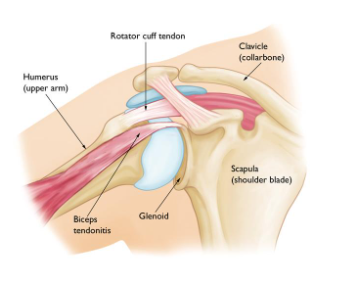
    The biceps tendon and the rotator cuff tendons are anatomically close, sharing the same space in the shoulder joint. This proximity means that injuries to the rotator cuff often involve the biceps tendon as well.
  2. Mechanism of Injury:


    Repetitive overhead activities, trauma, or degenerative changes can lead to injuries. When the rotator cuff is damaged, the biceps tendon can be subjected to increased stress and strain, leading to inflammation or tears.
  3. Pathophysiology:


    Inflammation of the biceps tendon (biceps tendinitis) often accompanies rotator cuff injuries. In some cases, the tendon may partially or completely rupture, exacerbating shoulder pain and dysfunction.
Diagram showing the close physical relationship between the biceps tendon and the rotator cuff tendon

Symptoms of Bicep Tendon Involvement

Patients with biceps tendon involvement in rotator cuff injuries often present with:

  • Anterior shoulder pain, particularly during overhead activities.
  • Weakness in shoulder movements.
  • A popping or catching sensation in the shoulder.
  • Tenderness over the bicipital groove.

How is this Diagnosed?

  1. Physical examination:

    Physical tests such as strength, range of motion, and special tests (ex. Speed’s test and Yergason’s test) can help identify biceps tendon pathology.
  2. Imaging studies:

    Ultrasound and MRI are crucial for visualizing the extent of tendon damage and identifying concurrent rotator cuff injuries.

Treatment Options

  1. Conservative management:


    Rest, ice, and anti-inflammatory medications.
    Physical therapy focusing on strengthening the shoulder muscles and improving flexibility.
  2. Medical management:


    Corticosteroid injections may be used to reduce inflammation and pain.
  3. Surgical Intervention:


    In cases of severe tendon damage, surgical options such as biceps tenotomy or tenodesis (reattaching the tendon to a different location) may be considered.
    Rotator cuff repair may be performed simultaneously to address both issues.

Prevention Strategies

Preventing biceps tendon involvement in rotator cuff injuries involves:

  1. Strengthening exercises:


    Focus on building shoulder and rotator cuff strength to support joint stability.
  2. Flexibility and Mobility:


    Regular stretching and mobility exercises to maintain a full range of motion.
  3. Proper Techniques:


    Ensuring correct techniques in sports and activities to minimize undue stress on the shoulder tendons.
  4. Gradual Progression:


    Avoiding sudden increases in activity intensity or duration to prevent overuse injuries.

Need more help?

The biceps tendon plays a critical role in shoulder function and is often implicated in rotator cuff injuries. Understanding the relationship between these structures is essential for accurate diagnosis and effective treatment. By combining clinical expertise with appropriate diagnostic tools and tailored treatment plans, healthcare professionals can significantly improve outcomes for patients with these complex shoulder injuries. PhysioNow is a leading provider of Physiotherapy Services. Whether it is a sports injury or long term shoulder injury, our therapists can set you on the road to recovery. Book with PhysioNow today for your first assessment and treatment!