Tag Archives: running

Runner’s Knee: How to Keep Yourself in Running Shape

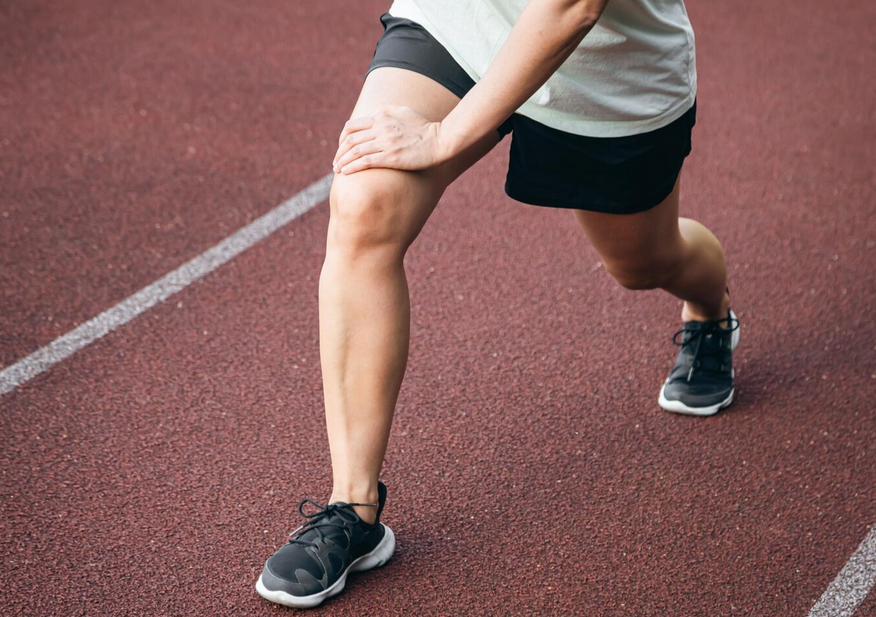
It’s a dull, aching pain around your kneecap that you can’t quite touch. Runner’s knee, or clinically known as patellofemoral pain syndrome (PFPS), is a very common cause of knee pain. The good news is, it us very treatable especially if you catch it early. In this blog, we’ll break down what runner’s knee is, how it happens, and tips to avoid it whether you’re gearing up for a marathon of just getting into running.

What is runner’s knee?

Runner’s knee isn’t as specific of a diagnosis as say, a hamstring strain. It is an umbrella term for pain where the patella (kneecap) and the femur (thigh bone) meet and form a joint. Normally, our patella sits in a little groove on the femur, and slides up and down like a track. However, different forces can act on the patella, like a muscular imbalance or improper form, that causes it be pulled off track. This creates extra friction in the area which can lead to irritation, inflammation, and pain.

What are the symptoms of it?

  • Dull pain in the knee, usually for the first couple minutes of exercise or after exercise
  • Increased pain when walking downhill or down stairs
  • Pain after sitting with the knee bent for long periods of time
  • Grinding, popping, clicking in the knee

How does it happen?

Your knee alignment while you’re running or exercising can be a major factor in developing runner’s knee. A professional like a Physiotherapist will assess your whole body to determine the cause of the knee pain.

Usually, 1 of 2 things happens or a combination of both.

  1. Too much, too soon. You’ve recently increased your running mileage or intensity, and your body is not yet used to the new workload. The tissues in your body get overloaded, leading to injury and pain.
  2. Biomechanical imbalances. This causes tracking issues at the knee cap. Commonly, the hip stabilizer muscles are not activating well, causing the knee to fall inwards (aka valgus) when you put weight on the leg. In other cases, the foot collapses inward (aka flat feet or overpronation), creating a similar result. In either case, the patella is being pulled out of alignment which with repetition, can develop into a runner’s knee.

Tips for prevention of runner’s knee

Smart training habits can keep you out of trouble. First, follow a 5-10% rule when ramping up. As you increase your mileage, you should not increase by more than 5-10% from the previous week’s mileage. A gradual progression gives your body time to adapt, decreasing the risk of overuse injuries.

Secondly, make sure your footwear is in tip top shape. Recommendations include keeping a rotating set of 3 shoes to prevent wearing out too quickly, and to switch them out every 500-800 km. Over time, the shock absorption capabilities of your shoes will decrease, so keeping them fresh also helps to keep your joints healthy.

Third, a running assessment can be helpful if you notice irregularities in your gait. A trained professional like a Physiotherapist can watch your run pattern to see if it’s contributing to your pain. For example, factors that can be adjusted include position of the foot during heel strike, step length, correction of valgus or pronation, trunk position and more. Longer steps tend to put more force on the knee cap, and a Physiotherapist can help you make the required changes.

Finally, build in some cross training days. Don’t skip out on your strength training, strong muscles are resilient muscles. Additionally, don’t be afraid to give your joints a break while keeping your cardio up by hopping onto a bike for some sprints, or a treadmill for some incline walking. Cross training helps to give your commonly used running muscles a break while still being able to make progress in your training.

How is runner’s knee treated?

In a flared up runner’s knee, you will need to take some time off. If you jump on one leg and feel a sharp pain that you would rate a 4/10 or above, it’s your body’s sign to take a rest. Continuing to push through will only succeed in worsening the pain. Follow the principles of RICE (rest, ice, compression, elevation).

A Physiotherapist will help you assess the root cause of your knee pain, remember it can come from different sources even though the pain is happening at the knee. They will also give you rehabilitation exercises to start retraining your knee, and the associated muscles at the hip or ankle that are contributing to the issue. For example, teaching you glute activation and strengthening exercises, and how to keep the knee in good alignment while performing single leg activities. Other interventions will include manual therapies on the joint, soft tissue releases for tight muscles, and a personalized home plan including your rehab exercises and a back to run plan.

Need help with a knee pain or a runner’s knee?

Look for PhysioNow! We have expert clinicians ready to help you get back on track. We have 10 locations across the West GTA including Burlington, Oakville, Mississauga and Etobicoke. Whether it’s a new or old pain, rest assured you can find help here. Book with PhysioNow today for your first assessment and treatment of knee pain!

Running Injuries: A Physiotherapy Guide

If you’ve ever had that nagging pain during or after your runs, or if you find yourself having to change how you’re running, this guide is for you. For many of our patients that are passionate runners, it can be hard to know when to push through and when an injury might be serious. In this blog, we’ll go over the most common injuries we see, and how to overcome them. First, let’s start with how they develop.

How do running injuries develop?

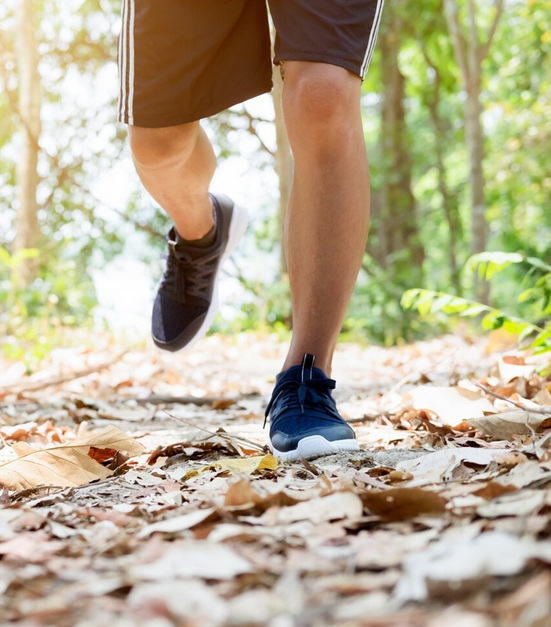
Trail running is easier on the tissues due to a softer landing. With running injuries, running surfaces, combined with footwear and mileage are the biggest culprits

Running injuries are almost always a result of overloading a tissue. Whether it’s an increase in training volume, skipping too many rest days, or a muscular imbalance, when it comes down to it, one area is getting over stressed. With repetitive high impact activities like running, the body produces and has to absorb huge amounts of force over long periods of time. Without enough time to repair your body, or without training your body’s ability to deal with these forces properly, injury happens.

Our runners will often say they have:

  • Increased mileage in the past couple of weeks
  • Changed shoes
  • Changed from soft trail to hard pavement or other surfaces
  • Started a new activity/sport on the side

What kinds of running injuries can develop?

Generally, we see a lot of the same issues with runners. These are obviously structures that have to handle he most pressure with running. While not restricted to these, we see most commonly:

  • Runner’s knee (aka PFPS or patellofemoral pain syndrome)
  • Shin splints (aka MTSS or medial tibial stress syndrome)
  • Achilles tendinopathy

Let’s go through a quick summary of each and what Physiotherapy rehab might look like with each one.

Runner’s knee

This feels like a dull aching pain around or beneath your kneecap. Normally, it will feel worse when going downhill or down stairs. It develops when there is an imbalance of muscles at the hip/thigh, causing an uneven pull at the knee cap. Normally our knee cap slides up and down very smoothly in the groove, but with an altered line of pull causes increased friction and irritation. Oftentimes, people with this problem have a gait pattern with the knees or feet falling in.

Your Physiotherapist will help you determine where the root cause is arising, whether it’s your run pattern, lack of foot or hip stability and control, or something else. They will give you specific strengthening exercises and help you correct your running form if needed.

Shin splints and stress fractures

This feels like a throbbing aching pain along the inner edge of your shin bone. Most people say they feel it when they start their run, feel better as they continue, then worse afterwards or even the next day. This condition is a continuum that starts as a more minor soft tissue injury and can progress to a stress fracture if untreated.

Shin splints management will depend on where in that continuum you currently fall. Your physiotherapist will perform some tests with you to determine whether you need to stop running for a time (if a stress fracture is present), or if it’s just soft tissue irritation. They will give you advice on how to modify your runs or how long you have to stay away for, and give you strengthening exercises in the meantime. Additionally, they will create a graded back to run plan to ensure that you can return safely with minimal complications. In the meantime, you could do some cross changing like cycling or walking as long as there is no pain.

Achilles tendinopathy

One of the strongest tendons in the body, our Achilles bears the brunt any kind of jumping impact. This feels like a pain in the heel, anywhere from the bone to a few inches above it. People will complain of a warm up pain, especially worse for the first couple of steps after running, or pain whenever they land on it.

Treatment will involve a full assessment on the lower body to determine if it being brought on by a different issue in the body. Otherwise, modification of your current run habits and tendon retraining involving heavy slow resistance is the gold standard. Your physiotherapist will guide you on the proper place to start to not irritate the tendon, and help you create a safe running plan. This might look like altered mileage, more rest, walk:run intervals and more.

When do I need to see a Physiotherapist?

A little bit of muscles soreness after a workout is normal, but a pain that lasts is not. Don’t let your issues build up into a bigger one. Pain is your body’s way of alerting you to something wrong, don’t ignore it! Even if it is a more minor injury, you can recover faster with a professional’s eyes on it. Physiotherapists are experts with movement and the human body. Not only will they help you address the current issue, but give you tips and advice to prevent future injuries as well.

Running injuries are frustrating, if you’ve had an issue for a long time it is still never too late! Look for PhysioNow today. We have 10 locations across the West GTA including Burlington, Oakville, Mississauga, and Etobicoke ready to help you. Book with PhysioNow today for your first assessment and treatment for a running injury, sport injury, or pain.

Marathon Training: 8 Tips to Keep You Injury-Free

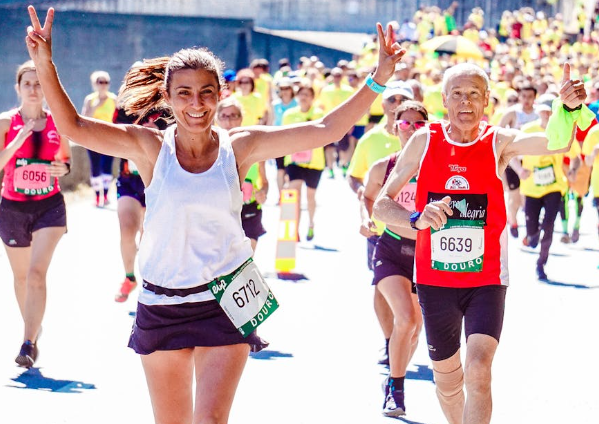
So you’ve decided to be part of the 1% that completes a marathon, an incredible achievement! Training for a marathon is demanding on both your physical endurance and mental resilience. One of the most common dangers comes from experiencing a sports injury during your training. This could be overuse injuries, strains, sprains, and more. Ultimately, these can hinder your progress and even affect you on race day itself. To help you keep your body as healthy as possible, here are some essential tips to avoid sports injuries while training for a marathon:

1. Start Slow and Build Gradually

  • Tip: Avoid the temptation to ramp up your mileage too quickly. Gradually increase your weekly mileage, and it is best to follow a structured program to avoid overtraining.
  • Why: Rapid increases in mileage or intensity are the most common cause of overuse injuries such as stress fractures, tendinitis, shin splints and more. Your body needs time to recover and adapt to the new loads you are placing on it.

2. Listen to Your Body

  • Tip: Pay attention to any signs of pain, discomfort, or fatigue. Don’t ignore persistent pain or push through it, it’s a sign that something may be wrong and need attention
  • Why: Ignoring pain or pushing through discomfort can make injuries and lead to longer recovery times. Additionally, addressing it early can save you weeks of pain and frustration.

3. Warm Up and Cool Down Properly

  • Tip: Always start your runs with a dynamic warm-up to increase blood flow and flexibility in your muscles. After your run, perform some stretches and easy mobility movements to cool down and improve flexibility.
  • Why: Proper warm-up and cool-down routines reduce the risk of muscle strains and improve overall flexibility and range of motion.

4. Implement Cross-Training

  • Tip: Incorporate strength, mobility, agility and other exercises into your routine. Cross-training activities like swimming, rowing, or cycling can your running muscles a break.
  • Why: Strengthening supporting muscles and varying your workouts helps prevent overuse injuries while still improving overall cardiovascular fitness

5. Good Footwear

  • Tip: Wear proper running shoes that fit well, are comfortable, and support your foot.  Replace your shoes regularly as they wear out.
  • Why: Ill-fitting shoes or worn-out gear can lead to foot injuries, shin splints, and other issues that may impact your training.

6. Stay Hydrated and Eat Well

  • Tip: Hydrate properly before, during, and after your runs. Maintain a balanced diet that supports your training regimen, including adequate protein and carbohydrates.
  • Why: Your body is burning a lot more energy now and needs the proper fuel to function at its peak performance

7. Rest and Recovery

  • Tip: Schedule rest days into your training plan to allow your body to recover and repair. Incorporate some deloading or lighter weeks to prevent burnout and overtraining.
  • Why: Rest is essential for muscle repair and growth. Overtraining increases the risk of injuries and can compromise your overall performance.

8. Seek Professional Guidance

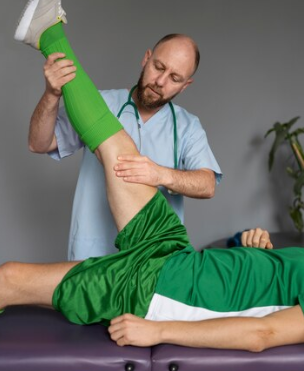
Physiotherapists and can assist with sports injuries

  • Tip: If you’re new to running or have specific concerns about your training, consider consulting a professional like a physiotherapist.
  • Why: Professional guidance can help you develop a personalized training plan, correct your form, and address any underlying or current issues.

By following these strategies, you can reduce the risk of sports injuries and increase your chances of crossing the marathon finish line! If you are experiencing some pain while running, look for PhysioNow. We have many expert physiotherapists that would be happy to help you with your sports injury. Book with PhysioNow today for your first assessment and treatment. Happy running!