The new school year has started and our children are excitedly starting up their intramurals, school sports team, gym classes and more. Whether your child is jumping into soccer, cross-country, basketball, or something else, we have to take caution when transitioning from spending summer on the couch to intensive practice.
Autumn always marks an increase in young athletes in the clinic with conditions like muscle strains, Osgoode Schlatter’s, shin splints, or others. Taking your child to a specialist in Pediatric Physiotherapy can help keep them healthy and pain free prior to an injury. Otherwise, a Physiotherapist can help them recover from an injury and prevent a future one.
Why do injuries increase early in the season?
Our children go from a fairly unstructured summer to suddenly intense sports and training several times a week. When combined with the fact that our children’s bodies are still developing, this abrupt transition triggers overuse injuries. Their growth spurts and still maturing bones make them more vulnerable to these types of injuries.
What kind of injuries are common with school sports?

The type of injury your child will be vulnerable to is dependent on the sport the play. For the most part, lower extremity injuries are more common since most sports involve running and jumping repetitively.
- Acute muscle strains: Hamstring, quad, groin and calf strains are very common from sprinting and jumping without proper warmup or strengthening
- Shin splints: Inflammation caused by repeated hard impacts in muscle and bone along the shin area
- Osgood-Schlatter Disease: Knee pain where the tendon below the knee cap attaches to the lower leg. Often see an enlarged and painful bump below the knee
- Sever’s Disease: Heel pain caused by repetitive pulling from the Achilles
- Tendonitis: Usually in the patellar tendon (Jumper’s Knee), Achilles tendon, and rotator cuff for swimmers, throwing sports, and volleyball players
How can I help my child prevent injury in their sports?
- Build up training loads over time
Some teams will give your child a strength and conditioning program to follow over the summer break. If not, you can make your own! Think about the demands that the sport has ex. running vs throwing vs jumping and have them practice some of these skills. Try to set up drills or easy bodyweight exercises at home, like shuttle runs or lunges, so that their bodies do not decondition over the summer.
2. Dynamic warm ups before activity
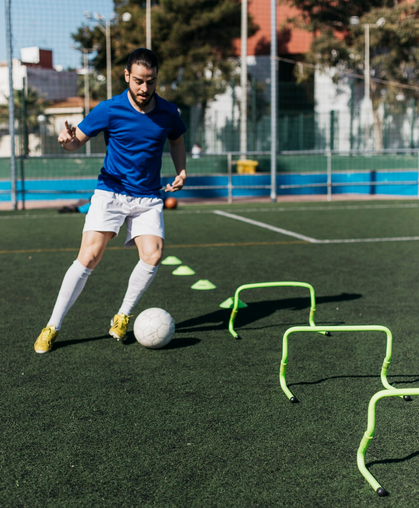
Teach your child the importance of a good warm up and how to perform one. Static stretching is not recommended before exercise as it can negatively affect performance. Instead, try things like:
- High knees and butt kick runs
- Walking lunges
- Shuffles
- Skipping
3. Replace worn out gear
Last season’s gear might not fit well anymore, especially if your child is growing quickly. Improperly fitting or worn out gear can greatly increase the risk of injury. Do an inspection before sending them back and help them break the new gear in to make the transition easier.
4. Proper rest and recovery
Young athletes need at least 8 hours of sleep per night, potentially up to 10 for optimal recovery. Ensure that they are eating and drinking enough to replenish lost nutrients and support muscular recovery. There is no shame in having them sit out for a bit to recover, the pros have to do the same thing! Let your child know that they can tell you about any discomforts or pains they have, and that it’s easier to fix them earlier on than later.
How can pediatric physiotherapy help my child succeed?

A common misunderstanding is that Physiotherapy is ONLY for injuries and ONLY exercises. This is not true! A well-rounded Pediatric Physiotherapy program will consist of recovery tools (think heat, ice, manual therapy techniques, foam rolling, stretching) and active exercises (strengthening, sport drills etc).
Additionally, many athletes come for what is known as “prehab” or prerehabilitation. This is a preventative method of exercise that protects athlete’s joints and muscles from injury through a preemptive strengthening program. This can greatly reduce the severity of any injuries and also prevent them from occurring at all.
For example, if your child is a basketball player, they can proactively strengthen their knee and calf muscles and tendons with specific Physiotherapy exercises. Physiotherapy can also assess for biomechanics, how your child runs, jumps, and lands, and correct any faulty movement patterns that may predispose them to injury. For example, letting the knees cave in while jumping and landing can put a lot of pressure on structures in the knee. Teaching a more efficient form ensures the longevity of the joints.
Looking for more information about physio for kids?
Look for PhysioNow! We offer Pediatric Physiotherapy and Sports Injuries Treatment with expert clinicians. We have 10 locations across the West GTA including Burlington, Oakville, Mississauga, and Etobicoke. Help your children stay in great shape throughout the season! Book with PhysioNow today for your first Pediatric Physiotherapy assessment and treatment!