Tag Archives: Knee injury

Soccer Injury Rehab: A Physiotherapy Guide

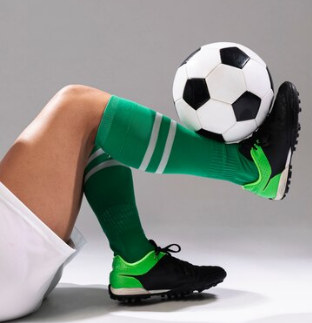
Soccer is a demanding sport. The quick sprints, sudden pivots, and powerful kicks that make the game exciting also put a lot of stress on your body. As the weather starts to warm up in the GTA, we know more of you will be getting outside and returning to the field. As a result, we always expect to see more injuries during this time, especially for our soccer players. Here’s what you need to know about soccer injury rehab, and how to stay off the sidelines this spring and summer.

Why do injuries happen at the start of the season?
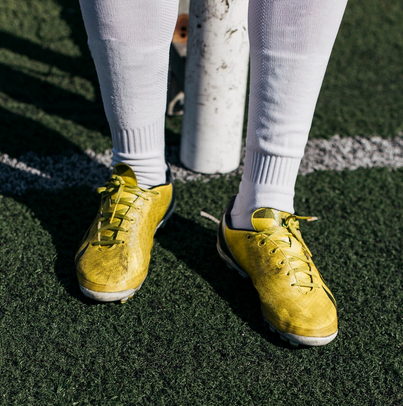
Cleats are specifically designed for traction and structural support. Depending on your level of play, you may need to switch them out every 6-12 months

Understanding why injuries happen is important to preventing them. Injuries usually stem from mechanical overload (too much force at one moment), training overload, (too much activity over time), pre-existing imbalances and injuries, and improper gear or technique. Let’s discuss each one briefly.

  1. Mechanical overload
    • Soccer has a lot of high speed movements like kicking and sprinting. In these movements, huge amounts of force are generated in the tissues in a very short amount of time. Because of this, this is often where they are the most vulnerable to strains and sprains.
  2. Training overload
    • In other words, doing too much, too soon. If you go from the couch to a 90-minute match without a progressive build-up, your tissues might not be ready for the load
  3. Muscular imbalances and old injuries
    • It could be as simple as an old twisted ankle that you never rehabbed. As a result, it’s not as stable or strong as it should be, leaving it and other areas vulnerable to injury
  4. Gear and technique
    • Having ill fitting or worn out shoes can increase the risk of falls, slips, and other traumas. Having improper technique such as with kicking the ball can put excessive strain on muscles and joints.

What are the most common soccer injuries?

Because soccer involves constant change of direction and explosive movements, most injuries affect the lower body. Here are the most common ones that we see in the clinic:

  • Ankle sprains: Usually caused by rolling the ankle on uneven turf
  • Hamstring strains: Often happen during a full-out sprint or a high kick
  • ACL Tears/Knee sprains: These frequently occur from a sudden pivot or change in direction.
  • Groin pulls: Common when changing direction quickly or reaching for a ball.
  • Shin splints: An overuse injury often felt by players increasing their duration of play or playing on hard surfaces.

Soccer injury rehab and prehab

Physiotherapy doesn’t just tell you to rest and ice. It can help even before you’re injured in a new mindset known as prehab.

What is prehab?

The best injury to treat is the one that never happens. Prehab, short for prehabilitation involves:

  • Screening: Identifying your specific movement impairments to address areas of risk
  • Strength & balance: Building “bulletproof” joints that can resist common injury patterns
  • Sport specific drills: Improving your body’s ability to decelerate, pivot, and other soccer techniques

What is rehab?
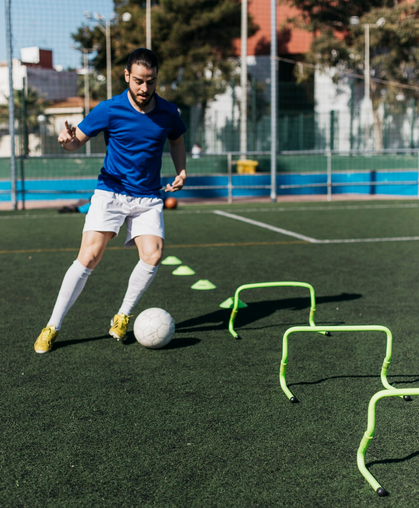
Soccer injury rehab ensures full return of speed, power, agility, strength, and coordination.

If you’re already hurt, we focus on a phased return to play. We aim to get you back as quickly and as safely as possible. There is no reason to rush a return if it will only result in another, and potentially more severe injury.

  • Phase 1: Pain management: Using manual therapy, heat, ice, and gentle movement to reduce swelling and regain range of motion
  • Phase 2: Loading: Gradually introducing weight and resistance to the injured tissue so it learns to handle stressors again
  • Phase 3: The final push: This is where we get sport-specific. We’ll have you sprinting, jumping, and kicking in a controlled environment to ensure you’re 100% ready for game day.

Need help with soccer rehab or a sports injury?

Then look for PhysioNow! We have an expert team of health professionals ready to help you get back into the game. Whether you’re preparing for the season or looking to rehab an injury prior to starting, we’ve got you.

We have locations at 10 clinics across the West GTA including Burlington, Oakville, Missisauga, and Etobicoke. With extended evening hours, Saturday hours, and free parking, we make sure that our clinics are accessible for everyone. Don’t let your pains stop your participation this summer, get it treated fast! Book with PhysioNow today for your first assessment and treatment! Or find us at P: 289-724-0448 or Email: applewood@physionow.ca
World Star Neymar’s Injury: A Physio’s Take on What Could’ve Gone Better

A slew of setbacks, most notably a serious knee injury and the resulting muscular strains, are the cause of Neymar’s physical issues. In October 2023, Neymar ruptured his meniscus and anterior cruciate ligament (ACL) in his left knee while playing for Brazil. Consequently, he was out of commission for about a year which needed a surgery and prolonged rehabilitation. Afterwards, he returned in October 2024, making a fleeting appearance for his team, Al Hilal, in a Champions League game. However, Neymar sustained a thigh injury in a Champions League match against Esteghlal FC barely two weeks after his return. After just 29 minutes of play, he was forced to leave the field. Al Hilal acknowledged that he had to miss up to six weeks of action due to a hamstring issue. 

These recurring injuries highlight the challenges athletes face when returning to play after significant injuries. Doctors had warned Neymar about the risks of muscular issues following his ACL recovery, emphasizing the importance of a gradual return to full fitness and sports.

As a physiotherapist, it’s crucial to understand that after a major injury like an ACL tear, the body undergoes changes that can affect muscle strength and flexibility. These changes can increase the risk of further injuries, especially if the return to play is not carefully managed.

In Neymar’s case, his rapid return to competitive play may have contributed to his recent muscle strain. A more cautious approach, focusing on strength and conditioning, and full muscle coordination could have potentially reduced the risk of such injuries.

What could have been done differently for Neymar?


1. Slower, more controlled comeback

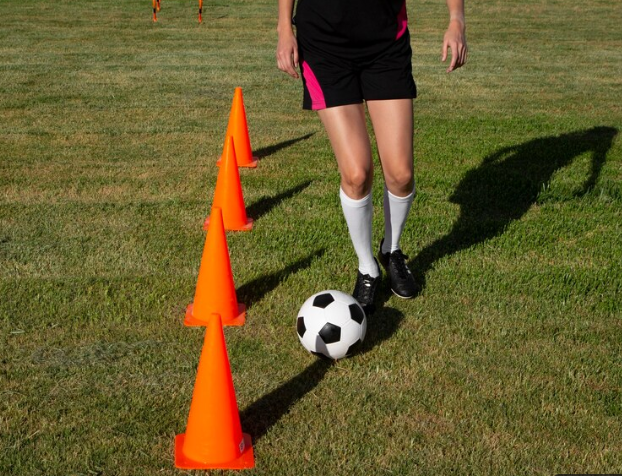
Sport specific drills are an important part of returning an athlete to sport to retrain coordination, movement patterns, endurance and more

After a major ACL tear and surgery, the body isn’t just healing — it’s relearning how to move, balance, and absorb force. Neymar’s return happened about a year after surgery, which sounds like enough time, but:

  • His movement patterns may not have fully normalized
  • He may have skipped some deeper neuromuscular retraining — stuff that helps the brain and body sync up under game-speed pressure

What could’ve been better: A longer ramp-up period with progressive match play at lower intensity (practice games, partial matches, etc.) could’ve helped


2. More emphasis on strength & muscle balance

After knee surgery, the entire leg can weaken — not just the injured spot

  • Imbalances between hamstrings, quads, glutes, and calves often creep in
  • In Neymar’s case, this likely contributed to his hamstring tear shortly after returning

What could’ve been better: More time spent rebuilding muscle symmetry and not just getting match-fit.


3. Psychological readiness

Elite players often feel pressure to return fast — for club, country, or personal goals.

  • But fear of re-injury or hesitation can subtly alter how they move
  • That can throw off mechanics and stress certain muscles or joints more than usual

What could’ve been better: Ensuring he felt 100% mentally ready and confident in his knee, not just physically cleared


4. Better load management

After return, his match minutes should’ve been strictly limited and monitored.

  • He played 29 minutes before the muscle strain — possibly more than he was ready for at that intensity
  • High-level games put maximum demand on recently healed tissues
  • Athletes may perform new or extreme maneuvers they did not train or practice sufficiently

What could’ve been better: A stricter minutes cap and more use of recovery tools like GPS tracking, force plates, or isokinetic testing to guide decisions


The Bottom Line on Neymar’s Injury

Even with world-class care, the biggest trap is thinking, “He’s cleared, so he’s good to go.” But high-level return to sport needs to be ultra-gradual and individualized. If you are experiencing something similar and looking to return to sports, look for PhysioNow! Our experts Sports Physiotherapists across the GTA can create a personalized program for you, your sport, and your level to ensure a safe and successful return. Don’t miss out any longer, book with PhysioNow today for your first assessment and treatment!

ACL Injury to knee

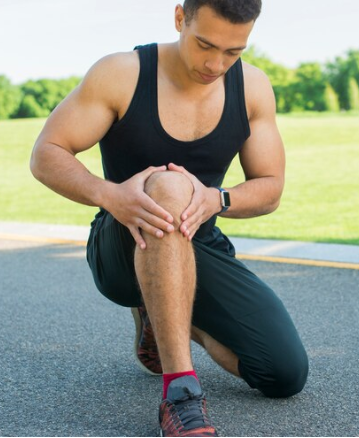
ACL Tears: Understanding Your Knee Pain


ACL Injury to knee

What is the ACL?

The ACL stands for the anterior cruciate ligament, which is one of the stabilizing ligaments in the knee joint. It is located behind the kneecap and connects the femur to the shin bone (tibia). Importantly, this ligament prevents excess forward and backwards movements of the femur and tibia overtop each other. When people say their ACL is injured, this refers to either a sprain or tear of the ACL ligament.

How is the ACL injured?

Ligaments work as a connective, stabilizing band for two bones. The ACL, one of two ligaments that cross in the middle of the knee, connects your thighbone to your shinbone and helps stabilize your knee joint.

ACL injuries often happen during sports and fitness activities that put high shear and stress forces on the knee:

  • Suddenly slowing down and changing direction (cutting)
  • Pivoting with your foot firmly planted (plant and twist)
  • Landing awkwardly from a jump
  • Stopping suddenly from a run/sprint
  • Receiving a direct blow to the knee or having a collision, such as a football tackle, dashboard injury etc

During the moment of injury, you may sometimes hear and feel a popping kind of sound inside the knee. Afterwards, the knee swells, bruises or becomes red, and is difficult to walk and put pressure on it. When the ligament is damaged, there is usually a partial or complete tear of the tissue. A mild injury may stretch the ligament but most of the tissue is still intact.

How do I know if I’ve injured my ACL?

Signs and symptoms of an ACL injury usually include:

  • A loud popping sound at the time of the injury
  • Severe pain and inability to continue activity
  • Rapid swelling
  • Loss of range of motion
  • A feeling of instability or “giving way” in the knee with weight bearing

However, it is best to get checked by a healthcare professional like a physiotherapist if you suspect an ACL injury.

Can this injury be prevented?

Accidents happen and sometimes they are unavoidable such as an accidental collision of players during a game. However, proper strength and conditioning and athletic training can minimize the risk of an ACL sports injury occurring. This may include:

  • Strengthening of core, glute, and knee muscles. Especially hamstring and quadriceps which are the main movers of the knee joint.
  • Co-ordination, balance, proprioception, mobility training and drills
  • Improving pivot shifting or other sport specific techniques

How is an ACL injury managed?

In acute injury of ACL tear or sprain, the RICE protocol will help minimize pain, swelling, inflammation, and risk of further injury.

1)The RICE protocol is as follows:

  • Rest: Avoiding exercise will allow muscles to recover and allows space for healing
  • Icing: Icing over top of the knee can help manage swelling, inflammation, and pain
  • Compression: Compression bandages or braces will reduce the stress on the muscles, help manage swelling and minimize pain.
  • Elevation: Elevating the leg on few pillows will reduce swelling from the leg

2) Modalities: TENS and ultrasound will help reduce pain and inflammation and increase the efficiency of healing

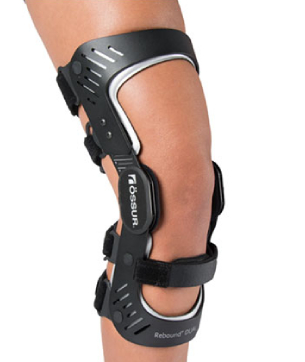
3) ACL brace: ACL braces will prevent further damage to the ACL and give more stability to your knee

Brace for ACL Injury

An example of an ACL brace by DonJoy, they are often made to custom fit each knee

4) Orthotics: Proper footwear will improve mechanics and reduce extra stress in knee joint

5) Strengthening of knee and hip muscles: Strengthening of those muscles will support the ligament and makes knee stronger to resist the injury.

6) Balance and co-ordination training:  Oftentimes, training the specific movement is the best way to improve it. Therefore, training of cutting, pivoting, suddenly starting and stopping, landing from a high jump etc in sports that use these movements is essential to minimizing the risk of an ACL injury.

Need help with a knee injury?

If you think you may have an ACL injury or are experiencing any other type of knee pain, look for PhysioNow! We are a clinic that operates in the GTA from Burlington to Etobicoke with 9 different clinic locations. Our Registered Physiotherapists are highly experienced in sports injuries and knee injuries. Book with PhysioNow today for your first assessment and treatment!